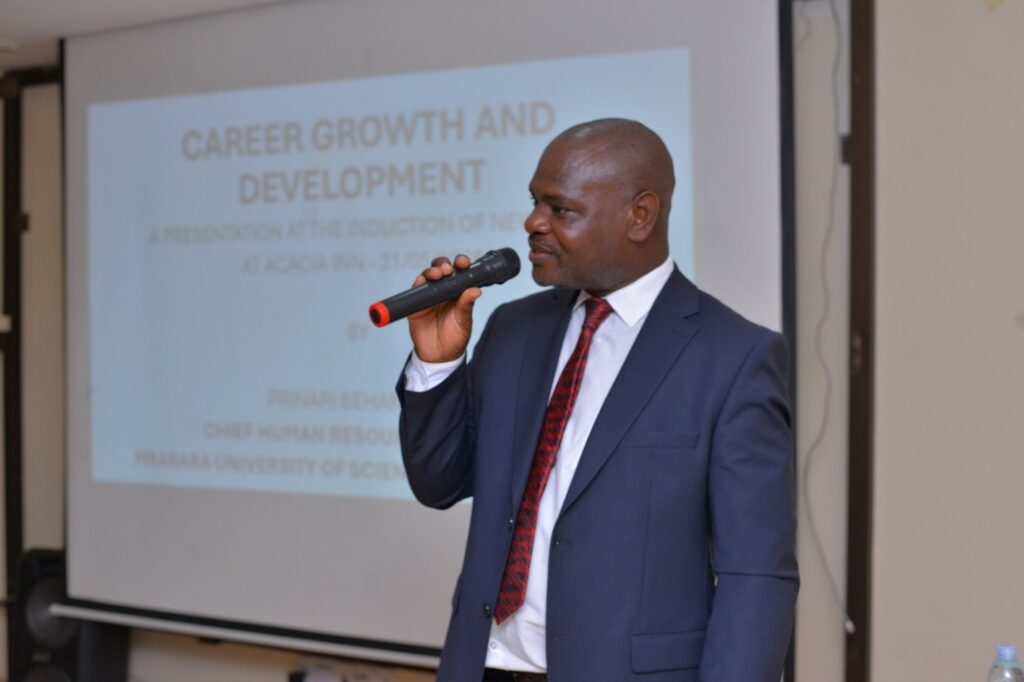
In an intentional deployment of institutional strategy designed to strengthen governance, elevate instructional delivery, and embed deep corporate accountability, Mbarara University of Science and Technology (MUST) through the Human Resource department successfully concluded its three-day intensive induction workshop for the latest cohort of academic, technical, and administrative staff.
Held at the Acacia Country Inn in Mbarara City, this training brought together University staff from different departments. The collective agenda centered on transforming raw professional talent into disciplined, legally aware, and highly motivated public servants capable of driving MUST’s historical mandate of producing community-centered solutions in science and technology.
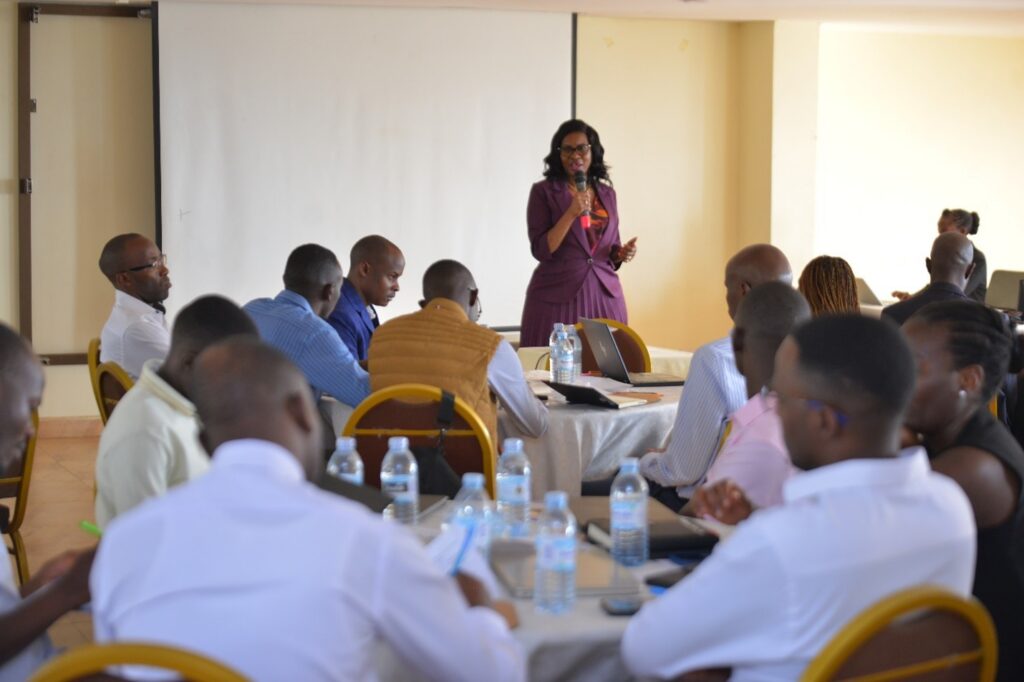

The Principal Legal Officer, Timothy N. Mugumya Esq., delivered an address regarding statutory compliance and the weight of personal accountability. He urged the newly recruited team members to immediately visit the university website and read all institutional policies, declaring that ignorance of the law is no defense. He explained that if an employee steps outside established guidelines and creates an administrative mess, they will be judged strictly as a professional, regardless of their original motivations. He noted that good intentions do not cure procedural errors in reality, reminding the cohort that compliance with written regulations takes absolute precedence over personal discretion in the public sector.
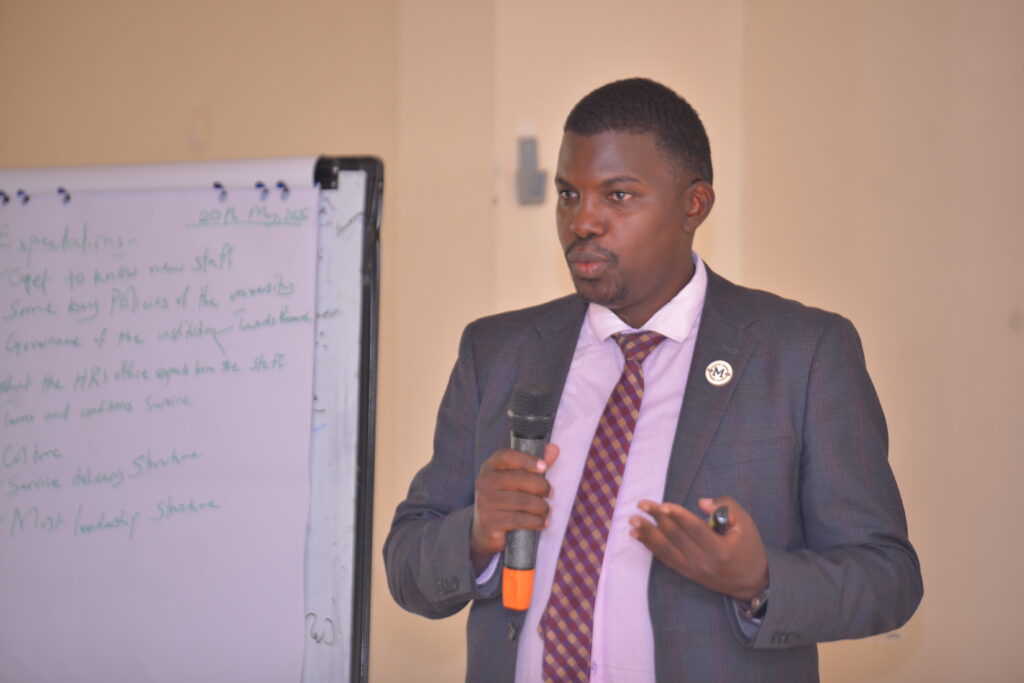
To help the new staff navigate these institutional structures safely, Timothy N. Mugumya Esq. shared a vital staff survival formula centered on respecting the university hierarchy. He cautioned the new team members to strictly protect their careers by recognizing and adhering to their designated organizational paths. He advised them to know their exact reporting lines, remain within their designated operational boundaries, and fully understand their specific appointment terms and job descriptions. By keeping their activities aligned with their official mandates, he explained, staff can easily avoid internal conflict, protect their professional integrity, and shield themselves from administrative or disciplinary vulnerabilities.
 The operational flow and structural organization of the university across its various campuses, affiliates, and legal frameworks were then broken down by the Deputy University Planner, Ms. Robinah Nakaketo. She explained that institutional governance cannot work effectively without strong management, mapping out the clear flow that links the university’s governing bodies to its day-to-day operations. Ms. Nakaketo detailed that this system is led directly by the Vice-Chancellor, who is supported by specialized thinking and operational committees. This collaborative setup ensures that policies passed at the highest levels of governance are accurately translated into smooth, functional administrative actions across all departments.

Ms. Nakaketo concluded by explaining how the university’s current five-year strategic direction directly mirrors Uganda’s broader national development goals. She emphasized that MUST’s vision of becoming a global center of excellence is intentionally designed to support the national vision and advance the country’s development priorities. She challenged the newly inducted cohort to align their daily work with these macro-objectives, stating that in Uganda today, anyone not actively speaking to or working toward that shared national vision does not belong in a public office. This final charge reminded the new employees that their individual contributions at MUST are directly connected to the growth and transformation of the entire nation.
Dr. Paul Turyaheebwa (PhD), the Deputy University Bursar, opened the financial governance masterclass by focusing on the deeply interdependent nature of public university funding. He reminded the new cohort that financial management is an interconnected chain that begins right at the department level, rather than an isolated function confined to the central cash office.
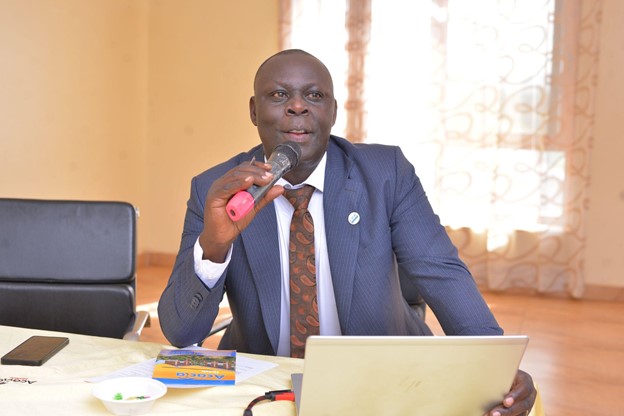
He explained that financial management ultimately affects every single unit, noting that everything begins with user departments identifying operational needs early and accurately to achieve absolute value for money. Dr. Turyaheebwa strictly warned that late procurement planning delays university progress and leaves vital public allocations unspent, which can result in severe cash clawbacks from the Treasury at the end of the fiscal year.
He also expressed appreciation to the Government of Uganda for fully funding the university’s annual operating budget, which seamlessly enables the institution to run its expansive teaching, research, and infrastructure development programs across all faculties.
Building directly onto the financial framework, Mr. Aggrey Amanyabyoona, the Principal Procurement Officer, demystified the legal operational boundaries governed by the Public Procurement and Disposal of Public Assets (PPDA) Act. He clarified the precise dividing lines between decentralized micro-procurements and full centralized bidding.

Mr. Amanyabyoona noted that user departments are permitted to directly initiate requests for local micro-procurements of goods and services below the 10 million Ugandan Shillings threshold. However, any institutional requirement exceeding 10 million Ugandan Shillings must be channeled through the central Procurement Unit to identify, vet, and contract an authorized external supplier.
He heavily focused on the professional exposures awaiting new staff appointed to act as Contract Managers for external university supplies, detailing that they bear the absolute legal responsibility to monitor service execution. Contract Managers must ensure that incoming goods meet standard technical specifications and are legally required to author a comprehensive technical performance report before any payment voucher can be processed for the supplier. This requirement underscores the university’s commitment to eliminating waste and securing quality inputs across all academic and administrative directorates.

Mr. Geofrey Mutebi, the Chief Internal Auditor trained the new staff on the correct legal channels for processing and retiring accountability vouchers, emphasizing that internal auditing functions as a proactive protective shield for public resources rather than an adversarial mechanism. Mr. Mutebi explained that all department accountability forms must pass through the exact same bottom-up channels used during the initial funds request, discouraging staff from moving physical vouchers manually outside the official tracked delivery systems.
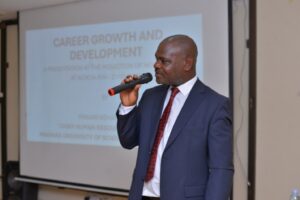
The Chief Human Resources Officer, Mr. Prinari Behangana, challenged the new staff to view their recruitment not as a static destination, but as the launching pad of a multi-pronged career path. Mr. Behangana broke down professional mobility into distinct options: vertical growth through competitive promotion, horizontal movement by expanding administrative capabilities across directorates , or stable one-point career paths chosen by technical specialists who remain satisfied within their specific technical entry domain. He explained that while the university recruits staff based on their current qualifications, upward or horizontal mobility within the public service framework entirely depends on individual motivation, exceptional performance appraisals, and a continuous drive to acquire new skills.
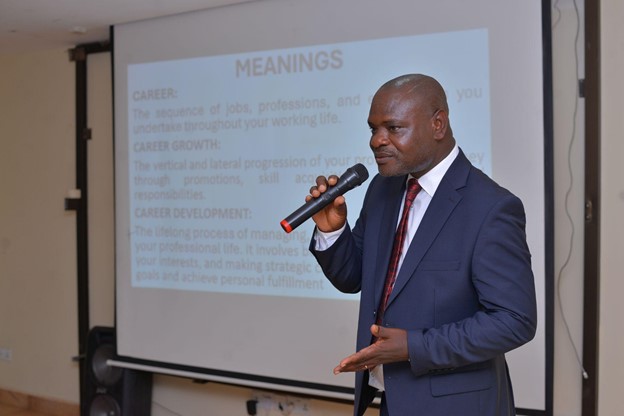
He also emphasized that if a desired career move requires exceptional performance, it is the employee who must perform. Similarly, if it requires an advanced degree, it is the employee’s responsibility to return to class, warning that without personal initiative, the system will eventually cause an individual’s career to stagnate. Mr. Behangana cautioned against joining negative cliques whose conversations focus on skipping performance appraisals or resisting internal control systems, urging alignment with teams discussing research grants or agricultural investments.
The Academic Registrar, Dr. Martha T. Kyoshaba (PhD), outlined the statutory mandate of her office under the Universities and Other Tertiary Institutions Act, highlighting its close operational relationship with the Deputy Vice-Chancellor for Academic Affairs. She explained that the central registry functions as a processing hub that relies entirely on a collaborative chain running from the Academic Registrar down to Faculty Deans, Heads of Departments, and individual lecturers to manage over 90 academic programs seamlessly.

Dr. Kyoshaba focused heavily on results management and customer satisfaction, issuing a strong directive to all new faculty members regarding accountability in grading. She declared that academic results are a fundamental student right, not a favor, and that missing marks are entirely unacceptable at MUST.
She emphasized that there should not be a single student struggling or begging for their performance results, urging teaching and administrative staff to master the Examination Regulations Policy which defines semester durations, grading structures, and GPA computations and to volunteer for the Examination Monitoring Team to ensure quality control across the institution’s 6,000-plus student body.
Building on student-centered governance, the Chief Quality Assurance Officer, Dr. Theodora M. Twongyirwe, delivered an interactive masterclass on embedding a systemic culture of quality, absolute accountability, and purpose across all university directorates.

She explained that every single desk from security guards and registry clerks to senior faculty instructors directly shapes the overall student experience, making quality assurance a shared responsibility across all offices.To modernize institutional oversight, she unveiled an aggressive shift toward a results-driven digital performance framework. This includes automated feedback loops, where class and lecturer evaluation forms are being fully digitized and will be electronically routed straight to lecturers’ inboxes at the end of each semester.

Mr. Dennis Lukaaya, representing the Administrative Staff Association, shared the rich history of MUST, tracing its origins to a landmark 1988 state visit to Cuba that established the university’s core community-based medical framework. He welcomed the new cohort to an institution that has successfully scaled the heights since its official establishment on October 28, 1989. Mr. Lukaaya detailed how the non-teaching body encompassing registry, ICT, legal, audit, and laboratory staff from scale M7 up to M1 functions as the vital operational engine of the university. He sensitized new recruits on internal advocacy channels, pointing to the University Council and the Staff Tribunal as the ultimate bodies for internal appeals, counseling staff to use structured internal conflict resolution mechanisms instead of rushing into external litigation, as a robust internal voice protects employee welfare while making the institution stronger.
The MUSTASA Chairperson, Dr. Emmanuel Munyarugero, welcomed the new academic cohort, detailing MUSTASA’s statutory mandate to protect staff welfare and engage human resources on optimal working conditions. He challenged the newly recruited lecturers to ensure that their research and classroom output actively drive national development, explaining that the quality of education delivered directly shapes the national demography and economy.
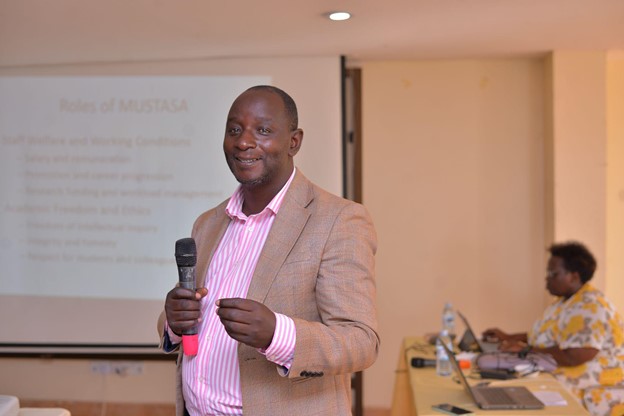
He urged the team to pursue highly impactful research rather than scholastic promotions alone, while managing their teaching roles with absolute dedication.
Focusing on personal financial security, Mr. Erastus Aheisibwe, representing the MUST Staff SACCO, delivered an essential masterclass on financial literacy. He urged newly inducted team members to build a disciplined monthly savings habit early in their public service careers.
He explained that true financial security begins by prioritizing savings over consumer expenditure, detailing how pooling institutional resources unlocks accessible, low-interest credit facilities for all registered members.
The three-day induction training reached its intellectual and reflective peak with a closing masterclass on professional identity, work-life balance, and retirement preparedness delivered by the immediate past Deputy Vice-Chancellor for Academic Affairs, Prof. Nixon Kamukama.
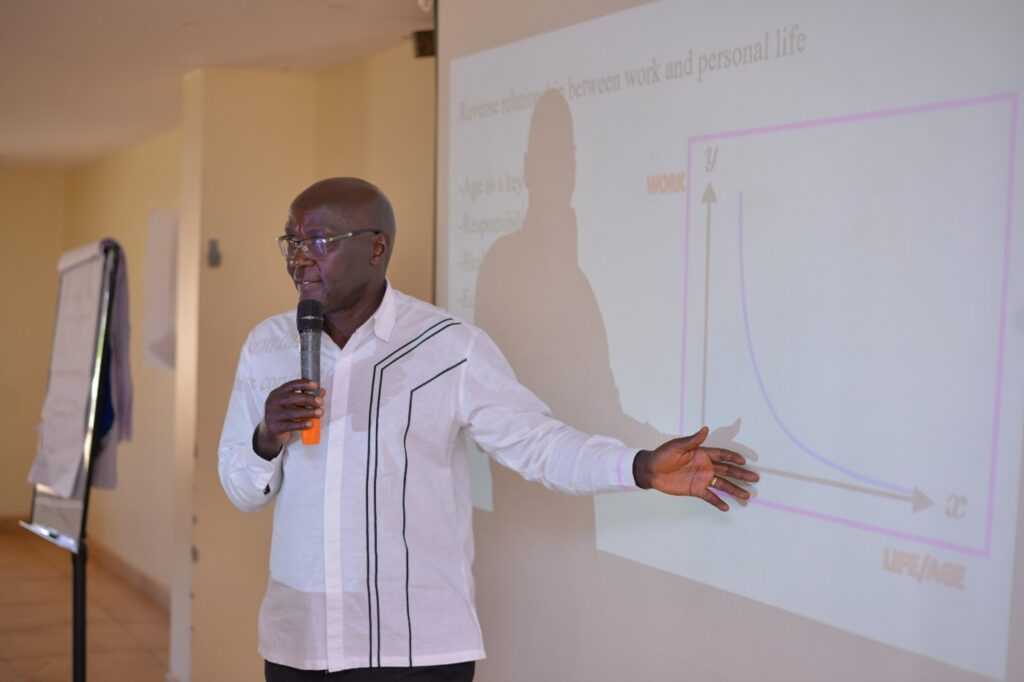
Drawing powerfully from his recent transition from top-tier university administration into statutory retirement, Prof. Kamukama delivered a candid reality check on the temporary nature of public offices and institutional titles, noting that institutional titles are completely temporary, but your name and your face are permanent. He reminded the new staff that senior positions belong to the public office, not the individual, urging them to manage authority with profound humility, guard their professional reputations fiercely, and never let corporate status override personal integrity.
Prof. Kamukama warned the younger demographic against the modern traps of lifestyle inflation, unsustainable consumer spending, and extreme workplace burnout that causes self-harm. He noted that over-committing to the office at the total expense of personal relationships, physical health, and family well-being is unsustainable, challenging the team to build solid boundaries and intentionally create time for their loved ones.



Addressing the realities of operational vulnerability, the induction training dedicated a specialized segment to risk management and individual legal coverage within the public sector. Mr. Emmanuel Ngabonzima, a representative from Case Insurance, opened the discussion by mapping out the unique liabilities faced by employees across both academic and administrative tracks.
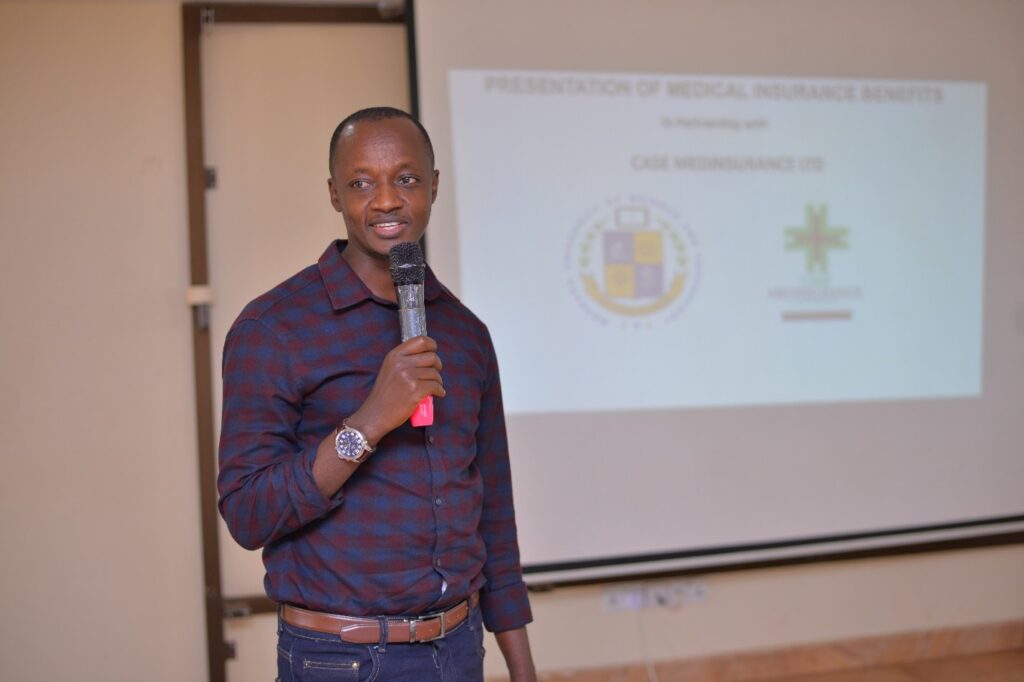
He reminded the staff that regardless of their specific designation, every officer at the university is bound to unyielding professional standards, meaning any procedural deviation or workplace error can carry personal or financial exposure. Mr. Ngabonzima explained that modern institutional insurance frameworks act as a critical safety net, providing staff with the necessary indemnity to protect their careers and livelihoods from the unforeseen litigious costs that can emerge during the routine execution of public duties.

 As the induction training concluded, the message resonated clearly across all presentation halls: MUST’s growth from its 1989 foundations into a modern center of higher education excellence depends entirely on the collective integrity of its workforce.