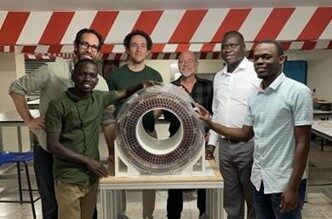
The Faculty of Applied Sciences and Technology (FAST) at Mbarara University of Science and Technology (MUST) continues to cement its position as a hub for medical innovation. At the heart of this progress is the Department of Biomedical Sciences and Engineering, where Dr. Eng. Johnes Obungoloch’s groundbreaking MRI project is making significant waves on the international stage.

In a powerful move to refine diagnostic capabilities in resource-limited settings, the MUST MRI Research Group has secured strategic partnership with the Institute of Instrumentation for Molecular Imaging (I3M) in Valencia, Spain, and global tech giant Microsoft.
Overcoming the “Noise” Barrier: Low-field MRI technology offers a more affordable and accessible alternative to traditional high-field scanners. However, the path to clinical perfection is not without hurdles. Dr. Obungoloch highlighted a critical technical roadblock: electromagnetic noise.
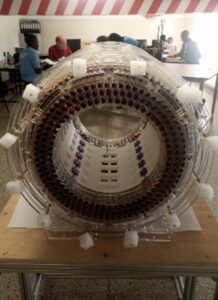
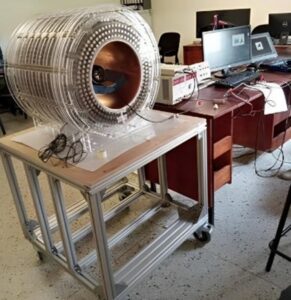
“One of the major challenges associated with low-field MRI is electromagnetic noise, which significantly degrades image quality and makes the images difficult to read and interpret,” Dr. Obungoloch explained.
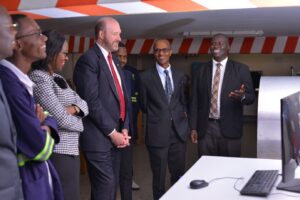
Typically, cleaning up these “noisy” images requires immense computational processing power that is often prohibitively expensive or unavailable in local laboratories.
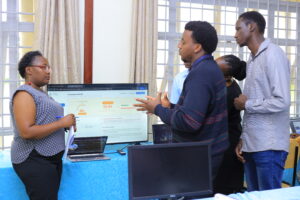
Cloud-Powered Diagnostics: The Tyger Framework: The collaboration is bridging this infrastructure gap through the power of cloud computing. Supported by Microsoft, the team is utilizing Tyger, a specialized framework designed for remote signal processing.
By leveraging the Tyger platform, the research team can:
- Upload Data: Transfer complex, heavy-duty image processing tasks from the local lab to the cloud.
- Enhance Quality: Use high-performance computing to filter out noise that would otherwise obscure vital medical details.
- Approach Clinical Standards: Generate high-fidelity images that are closer to the level of clinical utility, potentially transforming how diseases are diagnosed in the region.
A Global Milestone for MUST: This partnership represents more than just a technical upgrade; it is a testament to the global relevance of African-led research. By combining the biomedical expertise of MUST, hardware and methods developed by I3M in Valencia, and the cloud infrastructure of Microsoft, Dr. Obungoloch and his team are proving that high-quality medical imaging is no longer a luxury, but a reachable reality.
The Vice Chancellor Prof. Pauline Byakika- Kibwika
 “On behalf of the University, I wish to extend my heartiest congratulations to Dr. Eng. Johnes Obungoloch and the entire research team for this remarkable breakthrough. By taking MUST’s innovation to the international stage and securing partnerships with esteemed institutions like I3M and Microsoft, you have demonstrated that our university is a global leader in problem-solving research.
This project is a shining example of how science and technology can be harnessed to address the unique challenges of our healthcare system. We celebrate your dedication to excellence and your commitment to putting MUST on the world map of biomedical engineering.” For more detail about the MRI Project Gains International Momentum, please click here: https://www.microsoft.com/en-us/research/story/when-mri-images-come-into-focus-how-tyger-scales-image-reconstruction/