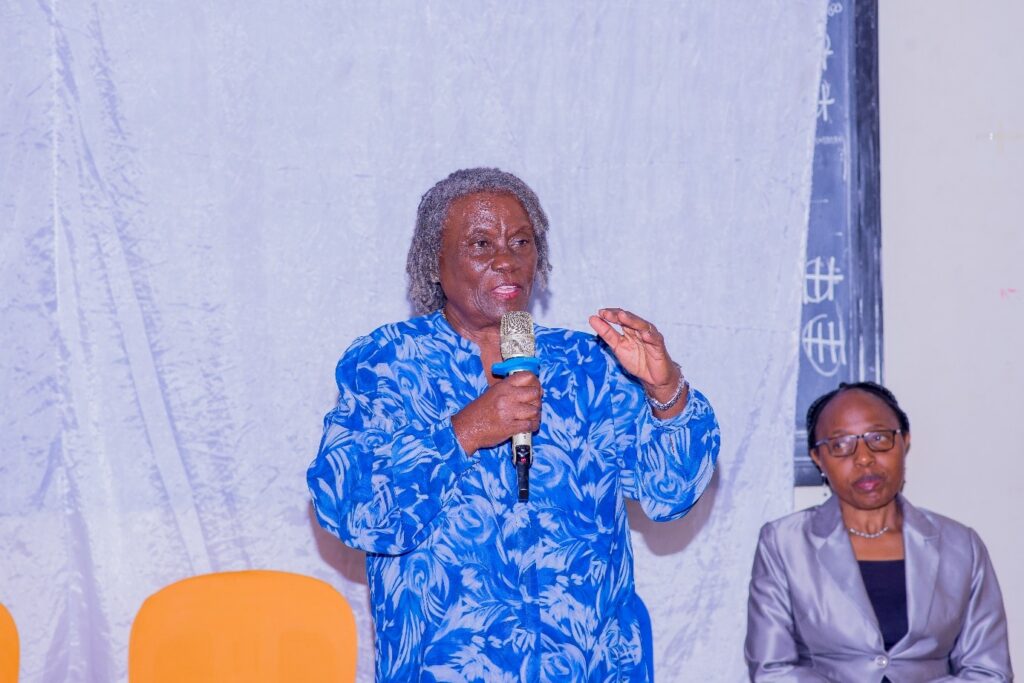
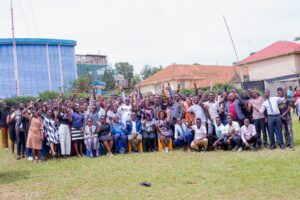
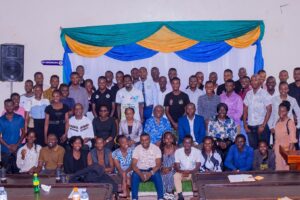
The transition from the lecture halls of the Faculty of Health Sciences (FHS) to the high-stakes environment of the medical professional world can be a daunting leap. Recognizing that a stethoscope and a degree are only part of the toolkit for success, Mbarara University of Science and Technology (MUST) recently hosted a transformative two-day soft skills bootcamp. The event was organized by the Mentorship Office under the supervision of Esther Catherine Atukunda (PhD)
 During the official opening of the Soft Skills Bootcamp, Dr. Elias Kumbakumba, the Dean of the Faculty of Health Sciences (FHS), expressed his deep appreciation to the university management and the Mentorship Office for the initiative. He noted that such programs are exactly what would distinguish MUST graduates in the professional world.
A Call for Student Seriousness: Dr. Kumbakumba described the program as “timely,” reflecting that if his generation had received such training during their student days, they would likely be much further ahead in their careers. He strongly advised the students not to take the opportunity for granted.
Addressing the issue of attendance, the Dean issued a stern warning to those who had missed the session. He stated that he was “dead serious” about the training and emphasized that he would personally hold absent students accountable, stressing that professional discipline begins with showing up.

The Value of Soft Skills in Health Sciences: The Dean also extended his gratitude to the facilitators from ROUTE International, noting that the skills they were imparting would “sell” the students beyond their own expectations. He expressed his gratitude that the Faculty of Health Sciences was prioritized for the training, highlighting that emotional intelligence and communication are critical in the health sector.
In his concluding remarks, Dr. Kumbakumba reminded the students that while their technical skills are meant to treat diseases, it is their soft skills that will heal patients and build their long-term careers.

The workshop, facilitated by experts from ROUTE International alongside seasoned university and external professionals, was designed with one clear goal: ensuring that our future healthcare providers are as adept at human connection and professional navigation as they are at clinical diagnosis.
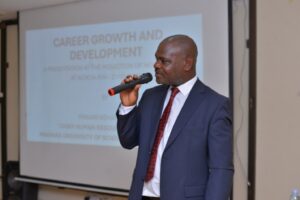
The 70% Rule: Beyond Academic Excellence: The bootcamp kicked off with a compelling reality check from Dr. Jane Kayondo, who introduced a striking statistic: 70 percent of professional success relies on soft skills.
Dr. Kayondo challenged students to look beyond their transcripts, emphasizing that the modern workplace demands adaptability and interpersonal savvy. Interestingly, she also touched on financial resilience, urging future medics to develop at least three streams of income to ensure security in an ever-evolving economy.
Mastering the art of connection and conduct

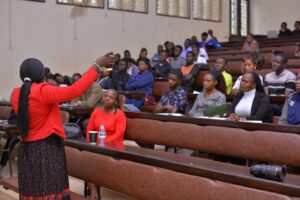
Communication is the heartbeat of healthcare. Ms. Stellah Atizuyo led an intensive session on effective communication, focusing on accountability. She reminded participants that in the medical field, the impact of one’s words is as significant as the treatment prescribed. The students delved into:
- Audience Awareness: Tailoring messages for patients versus colleagues.
- Non-Verbal Cues: The power of timing and body language.
- Mental Well-being: In a second session, Ms. Atizuyo addressed the “silent stressors” of the workplace, teaching emotional resilience through the power of forgiveness and proactive self-care.

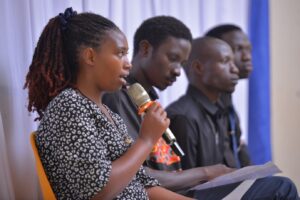
Professionalism was further dissected by Ms. Regina Musaazi, who drew a clear line between ethics and professional conduct. Her session on organizational culture and protocol served as a guide for students to make lasting first impressions and maintain healthy boundaries in professional settings.
The wealth quadrant and the professional edge
To prepare students for the competitive job market, the bootcamp provided practical drills on CV writing and interview techniques. However, the vision went beyond just “getting a job.”
Dr. Leonard Bakahika shifted the perspective toward financial independence. By introducing the Wealth Quadrant, he inspired students to become system-builders creating structures where money works for them. His message was clear: persistence in the face of failure is the hallmark of a truly successful professional.
Mentorship Program: From Uncertainty to Empowerment
In an inspiring closing address, the Program Coordinator, Dr. Esther Atukunda, summarized the essence of the two-day intensive training, highlighting that a degree alone is not a guarantee of success. Success, rather, is the result of preparation meeting opportunity.
Dr. Atukunda outlined five key values to anchor the finalists as they transition from academic life to professional independence:

- Clarity: Moving beyond the “what next?” phase by breaking down large goals into small, actionable steps. The workshop emphasized that while the path may differ for everyone, progress not perfection is the goal.
- Courage: In the world of science and healthcare, the stakes are high. Courage was defined not as fearlessness, but as acting professionally despite fear and having the humility to seek feedback from mentors and seniors.
- Connection: Finalists were reminded that “the transcript alone is not enough.” Success is built on professional networks. Students were urged to nurture the connections made at MUST and to treat their peers as lifelong colleagues.
- The Best Version of Self: This begins with self-awareness and emotional intelligence. The sessions highlighted the importance of empathy, integrity, and maintaining mental health as the foundation for high performance.
- Practical Mastery: The workshop provided “real-world” tools from financial budgeting and investment to crafting compelling CVs and maintaining a professional digital footprint.
A Call to Action: As the finalists prepare for their “sign-out” from MUST, Dr. Atukunda left them with four practical commitments:
- Build a Portfolio: Create a story of impact through CVs, project dossiers, or even video pitches.
- Seek Mentors Actively: Identify 2–3 mentors who align with your goals for regular guidance.
- Use Feedback as Fuel: Stay updated with current evidence to avoid professional shortfalls.
- Pursue Opportunities: Treat the search for your next role as a full-time commitment.
Gratitude and Vision: The session concluded with a heartfelt acknowledgement of the partners who made the event possible, including Dr. Jane Kayondo and the ROUTE International team, and the Dean of the Faculty of Health Sciences, Dr. Kumbakumba. Special appreciation was extended to the Vice Chancellor for her commitment to student wellness and for initiating this first structured mentorship program.

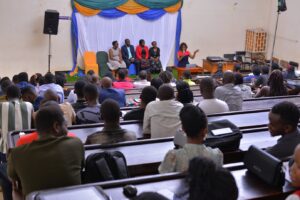
The Fireside Chat: by Ms. Angella Nakato Muyingo
In a standout segment of the workshop, Ms. Angella Nakato Muyingo, the Senior Communications Officer at MUST, moderated an insightful fireside chat that pivoted the conversation toward the often-overlooked necessity of mental health as a critical soft skill. Moving beyond the traditional checklist of technical competencies, the discussion underscored that resilience, self-awareness, and emotional regulation are indispensable tools for navigating the modern employment world.
Ms. Nakato emphasized that maintaining a healthy mind is not just a personal priority but a professional asset that enables consistency, effective leadership, and the ability to thrive under pressure. To illustrate this, she shared a powerful analogy of a snake bite: if a green snake bites you and slithers away, do you chase it to demand an explanation, or do you immediately attend to the wound to stop the venom from spreading? By framing mental well-being as a “must-have” skill, the session challenged finalists to invest in their psychological fitness with the same rigor they apply to their academic and clinical expertise.
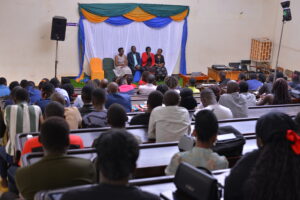 The Moral of the Story:The “Snake Bite” analogy carries a profound lesson for young professionals entering a high-pressure workforce: Prioritize healing over hostility.
In life and career, you will inevitably encounter “bites” criticism, unfair treatment, or unexpected setbacks. The “venom” represents the anger, resentment, and stress that follow. If you spend your energy chasing the source of the pain (the snake) to ask “why me?” or seek revenge, you allow the venom to circulate and do more damage to your system.
The moral is that your primary responsibility is your own recovery. Success in the professional world requires the emotional intelligence to let go of what you cannot change and focus your energy on managing your reaction, protecting your peace, and ensuring that a single negative event doesn’t poison your entire future.
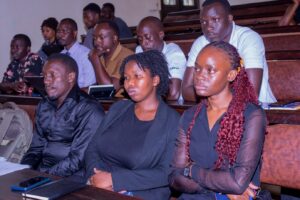
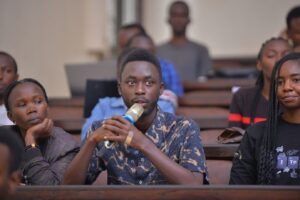
A “loading dose” for the future
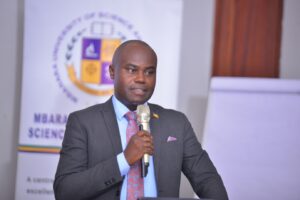
The workshop was graced by the Deputy Vice Chancellor for Academic Affairs, Prof. Joseph Ngonzi, who served as the Chief Guest. In a powerful address, Prof. Ngonzi described the two-day training as a “loading dose” of life skills—a necessary surge of knowledge to prepare students for the “maintenance dose” of real-world experience.
“True success is rooted in the human dimension,” Prof. Ngonzi remarked. “Soft skills are not just additions; they are the foundation that allows your technical knowledge to thrive.”
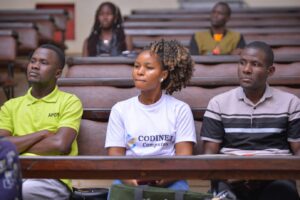 He challenged the students to adopt an “eagle mentality,” urging them to fly above limitations, embrace ambition, and remain open to continuous learning. He pledged the university’s commitment to rolling out similar programs across other faculties, ensuring every MUST student graduates as a holistic professional. Furthermore, he proposed the development of a university policy on mentorship to institutionalize this support.
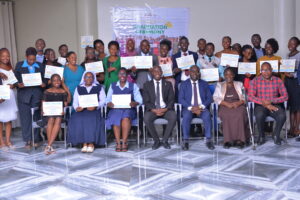
Becoming Problem-Solvers: The two-day bootcamp concluded with a shift in identity. The students left not merely as “job-seekers,” but as problem-solvers equipped with integrity, excellence, and the soft skills necessary to navigate life after campus.
As they return to their clinical rotations and studies, they carry with them the reminder that while technical skills may get them through the door, it is their character and communication that will define their legacy.
 “SUCCEED WE MUST”