In 2018, Mbarara University of Science and Technology (MUST) through the Faculty of Medicine Community Health Department, established a project known as First Mile Community Health Program (FMCH) aimed at creating a strong bond between MUST and the community within its catchment.
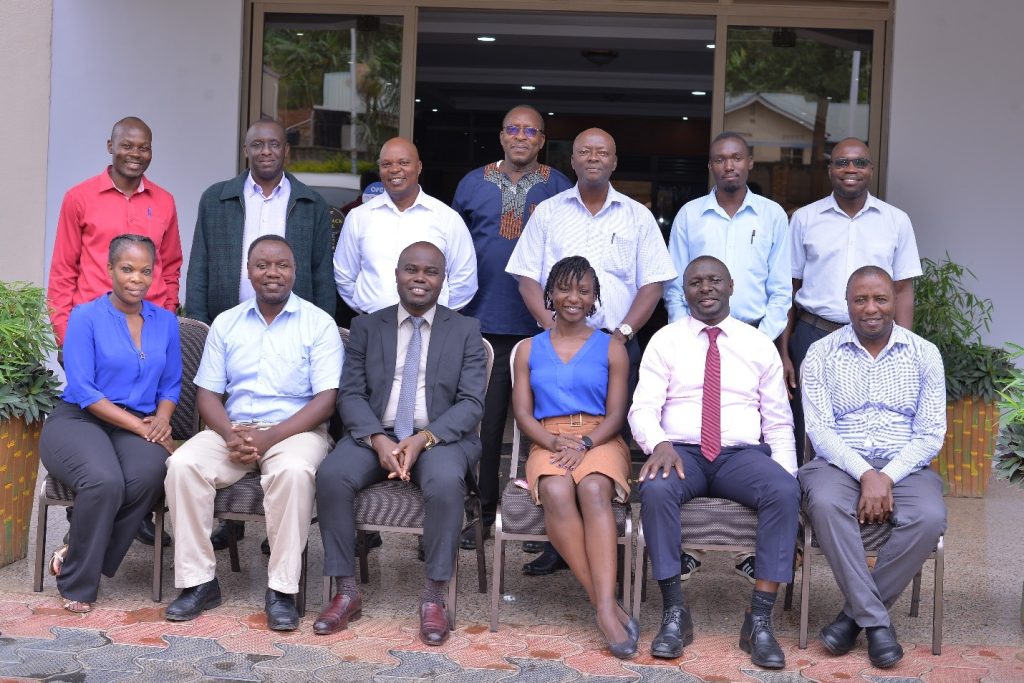
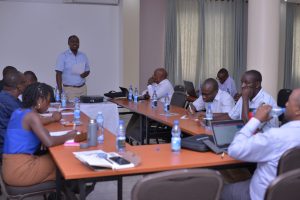
On March 14th, 2023, FCMH program leadership met with the Faculty of Medicine Heads of Departments (HoDs) in a planning meeting for the year 2023. This was also attended by Dr. Joseph Ngozi, the Dean Faculty of Medicine.
During the meeting, the HODs were briefed on the activities of FCMH since 2018. Mr. Ntaro Moses, the Deputy FMCH program director and Acting HoD Community Health Department applauded the work done by the HODs in the implementation of the program activities.
‘’The department is proud of the work done especially in taking undergraduate students to communities to learn from the field and postgraduate students to offer additional expertise in the health facilities where they are hosted. We welcome you to this meeting to plan together on how we are going to achieve more this year,’’ Mr. Ntaro Moses added.
The Department of Community Health at MUST, in collaboration with Massachusetts General Hospital in Boston, has been implementing the First Mile Community Health Program, providing excellent healthcare services to communities in southwestern Uganda. The program has recorded several success stories in healthcare service delivery.
During the meeting, Dr. Peter Kawungezi, the Program Coordinator at FMCH, reported that the program has made a significant positive impact on healthcare service delivery in over 19 districts in Southwestern Uganda. This has been achieved through a range of activities such as rejuvenating services like blood transfusion, initiating specialized clinics like ophthalmic clinics in primary healthcare facilities, on-site mentorship of primary healthcare providers, and capacity building through Continuing Medical Education (CMEs), among other activities.
He reported that more than 245 primary healthcare providers from 50 health facilities have been trained in the quarterly CMEs. 185 postgraduate trainees from more than 10 Departments have been supported to have experiential learning in the lower-level health facilities in MUST catchment. Through this, they have extended specialized services to the community and supported in leadership and planning roles while at these facilities.
In his opening remarks, Dr. Jospeh Ngonzi, the dean Faculty of Medicine, thanked the program leadership and was proud of the achievements registered. He stated that Faculty is planning to incorporate the PG rotations in the community-based education and research services (COBERS) for undergraduate students. ‘’FMCH has done a tremendous job in extending healthcare services to people within their communities and also in training our students both at postgraduate and undergraduate levels. As a Faculty, we are working towards integrating FMCH activities within the FOM undergraduate syllabus and see how we can offer more support. This way we shall sustain the program even after FMCH. We hope that we shall expand this to more health facilities and communities so as to more people are benefited,’’ He assured.
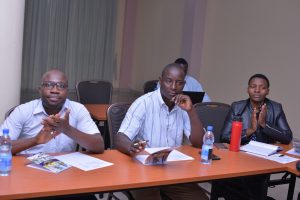
The HODs commended the remarkable achievements of FMCH in fulfilling MUST’s vision of serving the community through sound contributions to the Faculty of Medicine. During the participatory planning meeting, it was disclosed that FMCH will support a total of four quarterly CMEs, facilitate clinical attachments of four primary healthcare providers at MUST every quarter, and extend PG community rotations for a duration of four weeks.
In his closing remarks, Assoc. Prof. Edgar Mulogo, the FMCH program director, indicated that this year the program will bring on board the biomedical engineering department to join the postgraduate community rotations.
‘’This year, we plan to attach students from the Biomedical Engineering department to health facilities where Postgraduate trainees will be hosted… We expect them to assist in the maintenance of medical equipment at health facilities,’’ Prof. Edgar Mulogo, the program director highlighted.