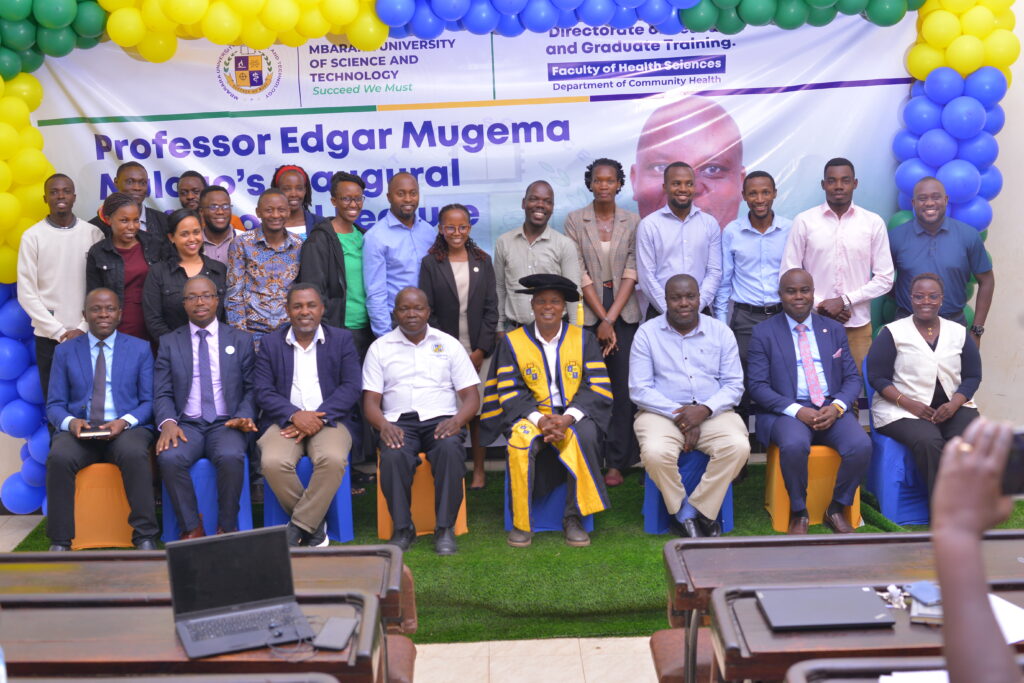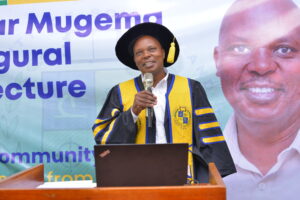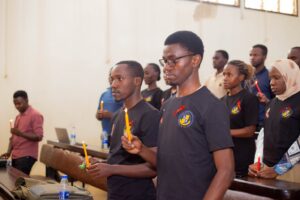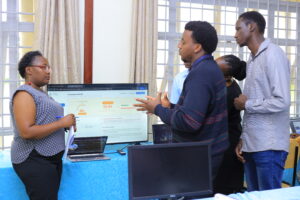
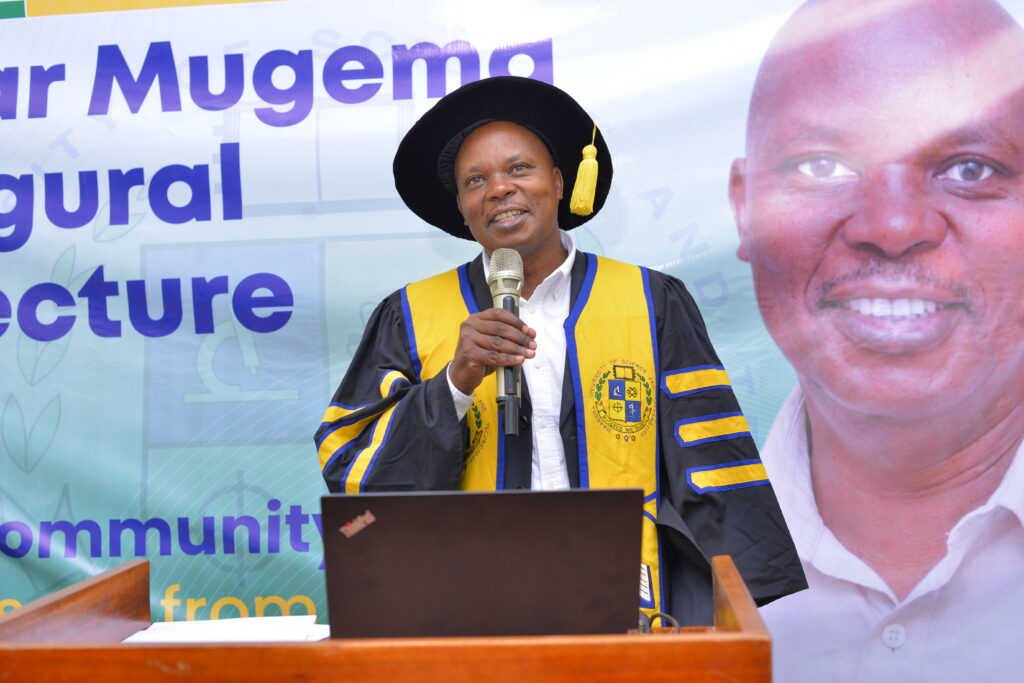
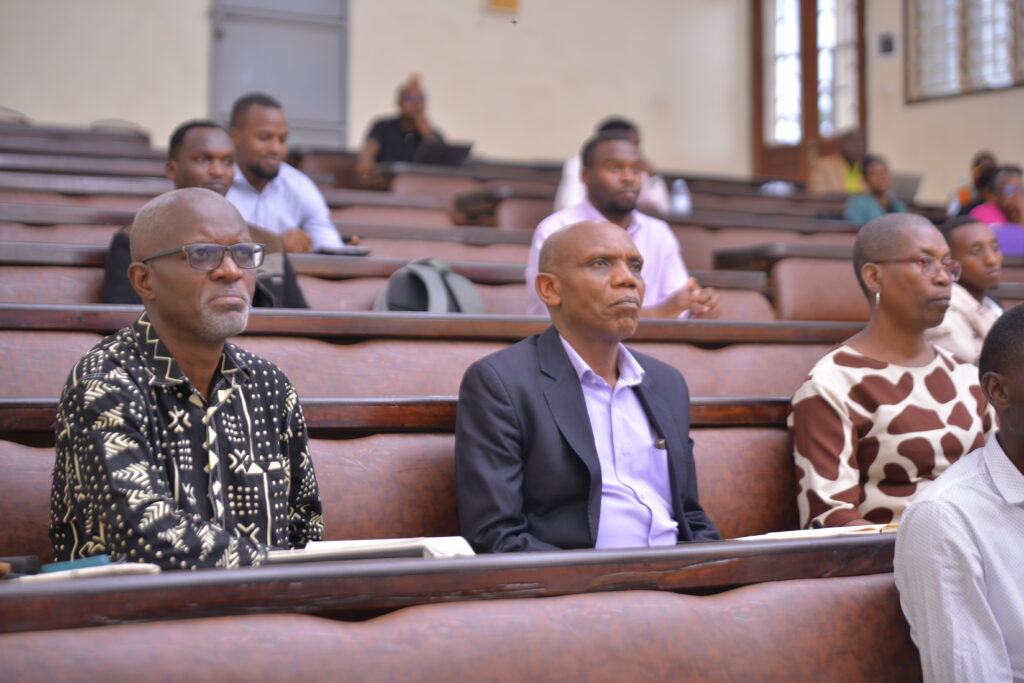
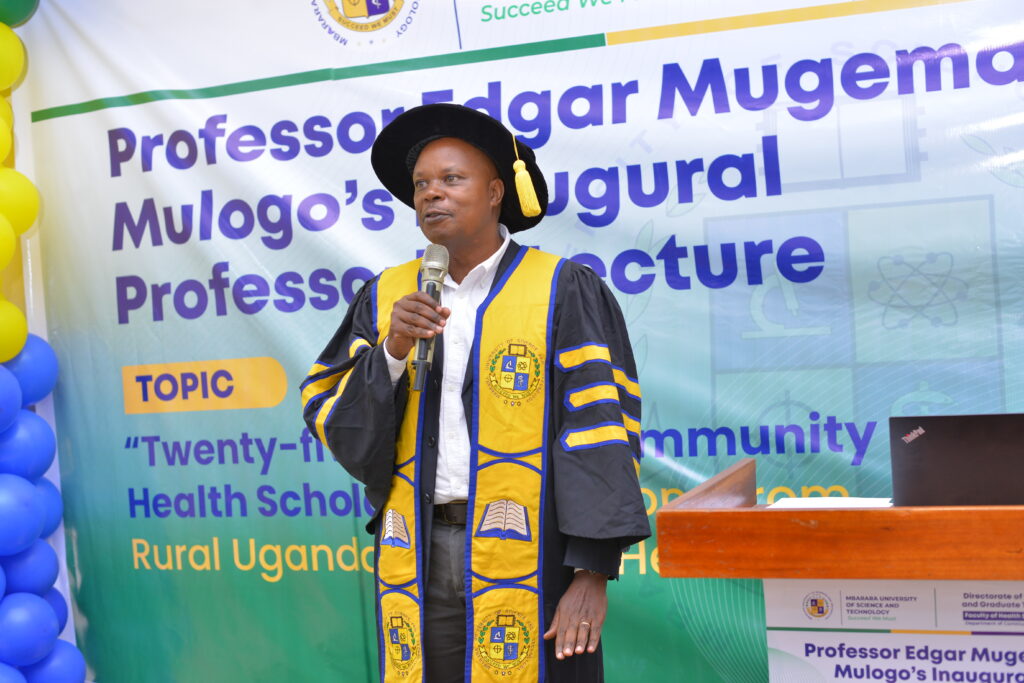
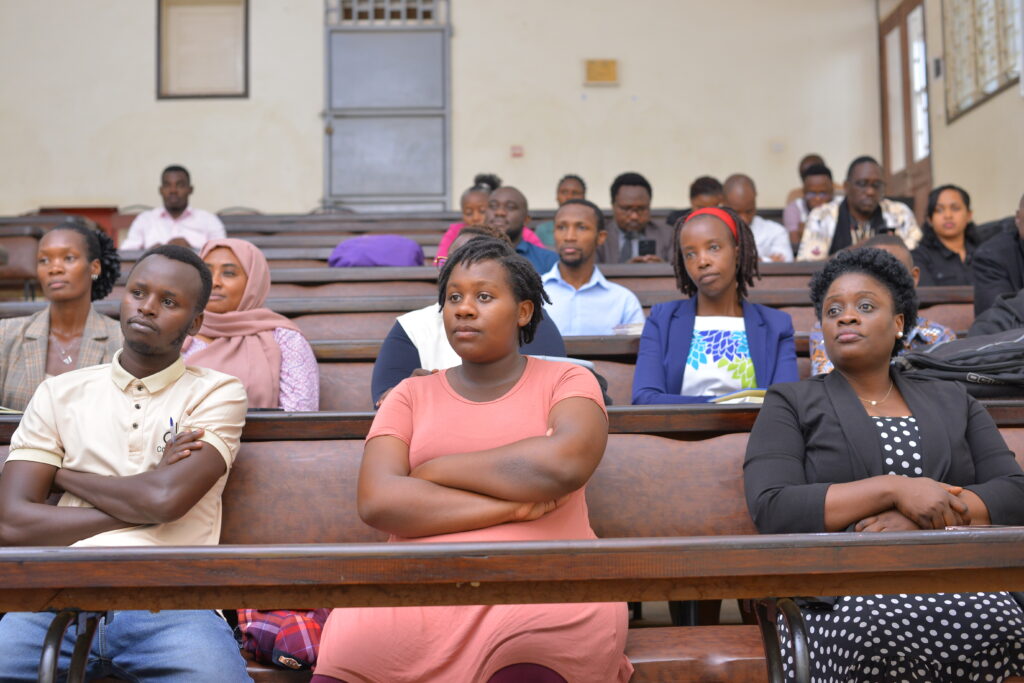
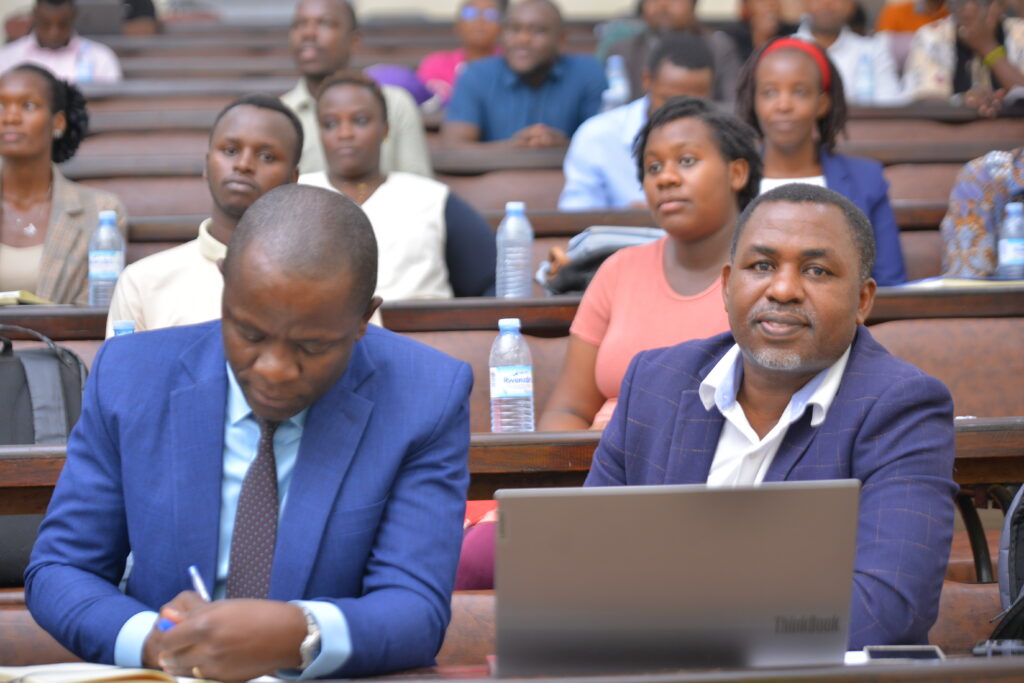
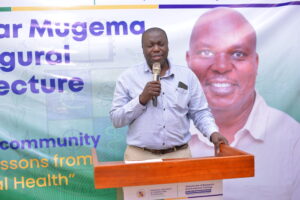
The Pharmacology lecture theater at Mbarara University of Science and Technology fell into a respectful silence as the grand academic procession marched into the hall on Tuesday afternoon. The occasion marked a historic milestone for the institution: the Inaugural Professorial Lecture, delivered by the newly elevated Professor of Public Health, Professor Edgar Mulogo.
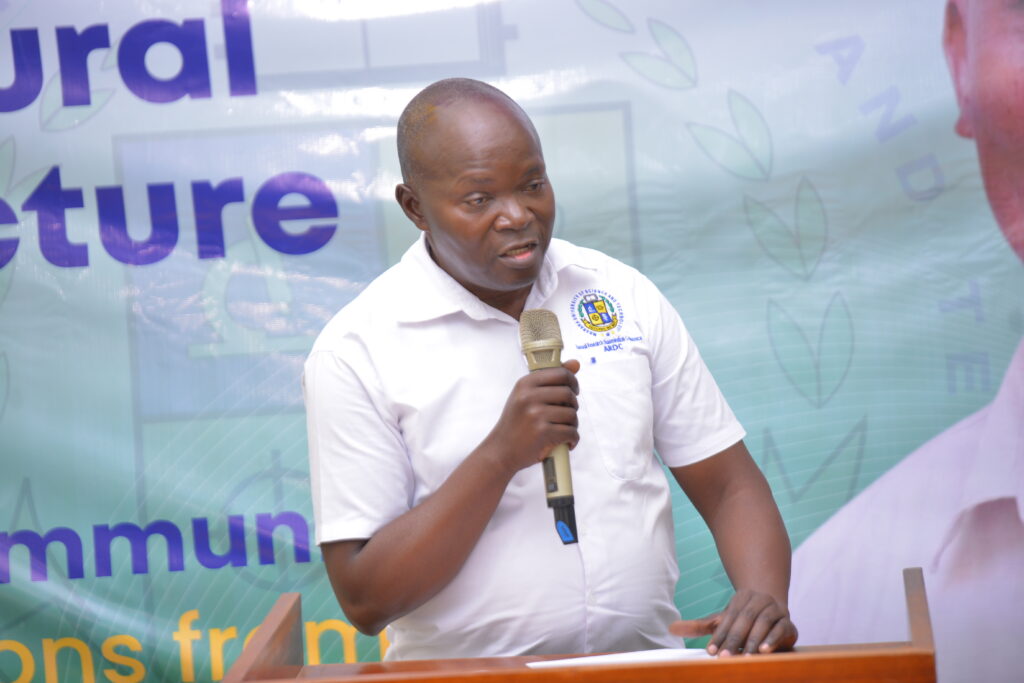
Moderated by the Senior Communications Officer-Public relations, Angela Nakato Muyingo, the event formally established a prestigious new university tradition. As Angella noted, promotion to full professor is the absolute pinnacle of scholarly achievement within academia. Under MUST’s newly enacted protocols, it now requires newly appointed professors to publicly share their career journey, highlight foundational scientific contributions, and present an enduring vision for future research and societal impact.
The Chancellor’s mandate
Speaking on behalf of top university management and the Vice-Chancellor who was concurrently chairing a vital strategic deployment meeting the Deputy Vice-Chancellor of Academic Affairs,Prof. Joseph Ngonzi took the podium to outline the profound institutional weight of the day.
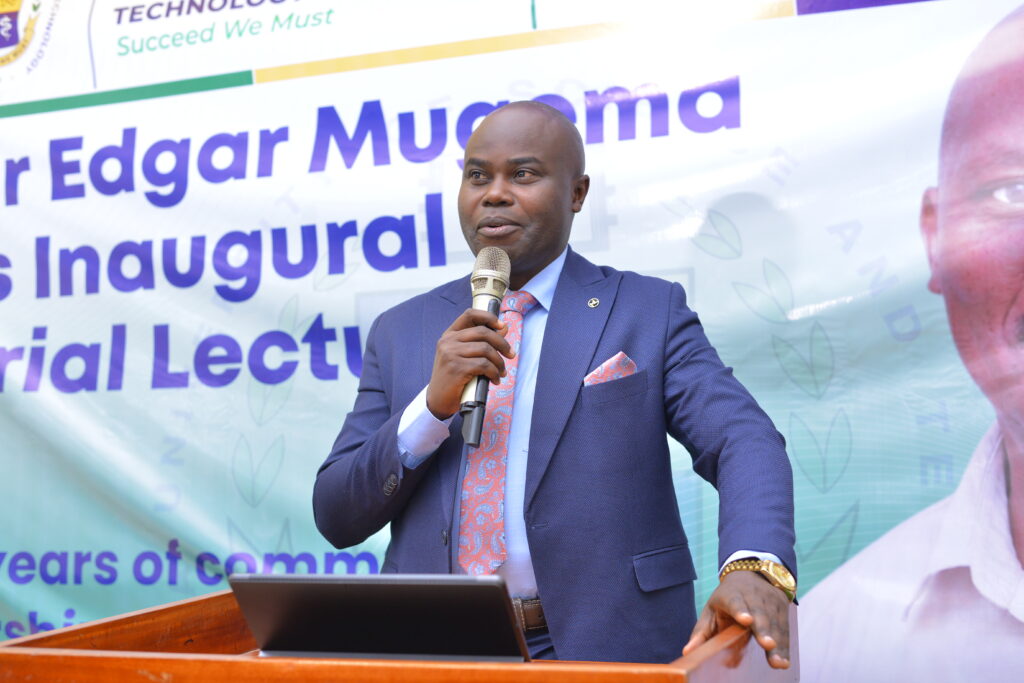
“Today is historical,” Prof. Joseph Ngonzi declared. “In the life of Professor Mulogo, this day will be written in the annals of history of Mbarara University. It is not a personal milestone alone; it is a celebration for the entire university and the world. Your products are spread all over, and we gather to recognize a journey marked by dedication and perseverance.”
Prof. Joseph Ngonzi warmly recalled his early interactions with the orator, remembering his days as a fourth-year medical student when Professor Mulogo led their send-off meeting. Acknowledging the expansive global network of healthcare professionals who have passed through Mulogo’s hands, Prof. Joseph Ngonzi lightheartedly remarked that if he possessed the wealth of the university’s major benefactors, he would have brought a two-legged animal as a celebratory gift to the hall, promising an “upgrade to a four or six-legged creature” as soon as his June salary cleared.
 Turning to concrete institutional impact, Prof. Joseph Ngonzi lauded Professor Mulogo’s relentless capacity to secure massive international implementation grants (such as NIH funding), noting that his efforts have directly provided jobs and critical livelihood security for dozens of local families.
How it started
When Professor Edgar Mulogo took the podium to map his quarter-century (25 years) academic journey, he opened with a striking narrative detailing the humble, raw realities of building a public health department from scratch.
Formally appointed on January 19, 1999, Mulogo reported to campus in March. In an era before mobile phones, when institutional communication relied entirely on physical post boxes, he was received by his first Head of Department, Professor Nyorogo.
The physical space allocated to the young Department of Community Health was famously close to the ground. Professor Mulogo recollected:
“The offices of the department were on the ground floor of the female students’ hostel. To complicate matters, that ground floor where we were located was also where the washrooms were. Okay? So, I can leave it to your imagination. You come to office in the morning, people are all around you heading to the washroom. We were young men in this department, but that is exactly where I landed. It required patience.”
Working alongside early MUST pioneers like Professor Jerome, Professor Nwaha (now at the Makerere School of Public Health), Professor Francis Bajunirwe, Dr. Sarah Nabukera, and their dedicated secretary Mary Kawuma, this immediate immersion into everyday human ecology grounded his lifelong focus on grassroots healthcare.
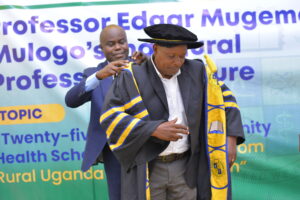
Long before establishing himself as an academic pillar at MUST, Professor Mulogo’s medical worldview was forged on the front lines of district clinical medicine. He recounted a defining early period at a regional referral hospital where he was overwhelmed by a relentless influx of patients streaming from remote regions—including Koboko, Yumbe, Moyo, Akua, Nebbi, and Zombo all requiring urgent dental and surgical extractions. Realizing that he and his small two-person team would rapidly burn out under the workload, he chose systemic intervention over clinical exhaustion.
 He brokered a partnership with a sanitational support organization called “WOW” to fund and execute a task-shifting training program. He successfully trained clinical officers and basic health personnel in essential extraction techniques, drastically reducing the caseload cascading to the referral hospital. This success sparked his definitive transition into public health—a profession where he could alter health outcomes at a population scale.
A chronology of academic and professional excellence:
- 1986–1992: Completed higher education and earned a foundational medical degree at Makerere University during a time of severe regional public health challenges.
- 1996: Graduated with a Master of Public Health (MPH) from Makerere University, mastering epidemiological tracking and protocol design.
- 1998–1999 (The HIV Frontline): Deployed to the Ministry of Health’s HIV/AIDS Control Program under the renowned program manager, Dr. Elizabeth Madra. Armed with a single laptop granted through his training scholarship, he wrote the protocols and evaluated Uganda’s pilot Voluntary Counseling and Testing (VCT) programs in Hoima and Iganga. He was subsequently deployed to reinforce the District Health Office in Kasese.
- 2000 (Global Systemic Frameworks): Traveled to Italy to earn a Master of Science in Health Services Management, introducing comparative global health models to his teaching.
- 2002 (Departmental Leadership): Appointed Head of Department (HOD) for Community Health at MUST, spending years balancing the administrative management of highly educated academic colleagues.
- 2008 (Senior Academic Milestone): Promoted to Senior Lecturer after nine years of patient teaching. Concurrently, he completed advanced doctoral coursework at Case Western Reserve University (USA).
- 2013–2014 (Setting a PhD Precedent): Earned his PhD in Public Health from MUST. Defying conservative expectations, he successfully negotiated with his doctoral supervisor, Dr. Sebastian Gbaine, and university administrators to bypass writing a conventional single monograph. Instead, he pioneered MUST’s first publication-based doctoral defense consisting of peer-reviewed papers already in print or press thereby establishing a progressive framework for future doctoral candidates.
- 2023–2026 (The Publication Peak): Driven by large-scale collaborative implementation grants from the National Institutes of Health (NIH) and enduring institutional ties with Massachusetts General Hospital, his research and publication output reached its highest historical peak.
 Professor Mulogo dedicated the core of his lecture to an absolute defense of Community Health Systems. He emphasized that a formal health system does not begin when a patient crosses the threshold of a general, regional, or national referral hospital; it begins within the household and the village square.
He presented three cornerstone pieces of implementation research that provided undeniable empirical proof of the economic and clinical value of rural health structures:
-
Economic Evaluation of VHTs: To counter institutional skepticism regarding village health workers, he executed a rigorous cost-effectiveness analysis using complex decision-analytic models. His study directly compared services delivered by Village Health Teams (VHTs) against static health center facilities, proving that VHT-led resource allocation is exceptionally cost-effective. This data served to scientifically protect the role of VHTs when new state cadres were being proposed.
-
Promptness of Care via iCCM: He evaluated Uganda’s Integrated Community Case Management (iCCM) strategy. His findings demonstrated that the physical presence of trained VHTs within a cluster drastically improved the speed at which families sought care within the vital, life-saving 24-hour window for the three major under-five killer conditions: malaria, pneumonia, and diarrhea.
-
The First Mile Program: Operating as an academic-community partnership in areas like Bukoye and Malira sub-counties, this program practically demonstrated that sustainable, equitable public health outcomes are impossible without deep community trust, capacity building, active local participation, and authentic community ownership.
Following the presentation, speeches from the Dean, Deputy Dean, and close colleagues from the Faculty of Health Sciences shifted focus to the orator’s personal character, mentorship legacy, and unique daily habits.
Magnetic Interdisciplinary Mentorship
Faculty leaders noted that Professor Mulogo’s actual legacy is written in the career trajectories of his trainees. He famously championed and protected young researchers whose ideas lay outside the traditional comfort zones of their departments.
As an example, he highlighted two publications he supervised: one for a student in Clinical Pharmacy analyzing the cost-effectiveness of drug shop providers versus community health workers, and another for a student in the Department of Surgery focusing on a complex clinical cost-analysis. Despite initial hesitation from conservative departmental panels, Mulogo guided these students through unorthodox, cross-disciplinary economic methodologies to successful publication.
The Testimony of Hospitality and Character
In deeply personal reflections shared by faculty members who had lived at his home or worked closely under his supervision, a portrait emerged of a deeply humble academic:
-
The Exemplary Host: He was described as an open, magnetic mentor whose home operates as a sanctuary. Trainees noted with gratitude that despite his high rank, he routinely cooks, washes dishes, and ensures that any student or guest leaving his household leaves with “pocket money” to survive tough economic seasons.
-
The Fish-Bone Analyst: In a lighthearted piece of advice to future hosts, colleagues noted that if anyone wishes to impress Professor Mulogo at a dinner table, they must serve him fresh tilapia containing many bones, as he genuinely loves to meticulously analyze the skeletal structure while eating.
“Lifting Metals of the Brain”
Closing the administrative tributes, a speaker shared a humorous discovery made while searching for a fitness facility in Mbarara. Local gym-goers revealed that Professor Mulogo was practically the custodian and most dedicated regular user of the local gym. The faculty leadership tied this back to his academic ascension:
“So the stature that you see in him is not accidental, but the result of hard work and lifting metals. But today, we are celebrating the lifting of the heavy metals of the brain. And so we want to congratulate you, Professor Mulogo. When a teacher sees their student excelling, it is their ultimate joy.”
Conclusion: Reflections for the Next Generation
In his final address to the congregation, Professor Mulogo summarized his 25 years of implementation science into four guiding principles for the university’s future:
-
Where Health is Formed: He reinforced a foundational maxim passed down by his early mentors (including international professors like Professor Mendel Singa and Professor Gilbert from Kenya): “Health is made at home and prepared in hospitals.” True health systems resilience relies entirely on fortifying the grassroots level.
-
The True Metric of Legacy: He challenged younger faculty members to look past superficial publication metrics or raw download volumes:
“Our legacy should not be built on whether a student has simply read the assignment or downloaded the reading material. It must be built exclusively on the long-term career success and societal contribution of our students.”