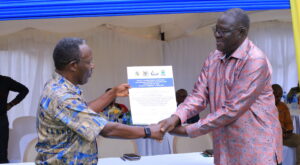
Inside the lecture halls of Mbarara University of Science and Technology (MUST), a quiet revolution is taking place. For years, brilliant innovations from civil engineering designs to life-saving biomedical solutions have lived and died within the “four walls” of the university. But on 24th April 2026, the dust is being shaken off.
The Challenge: A discovery uncommunicated
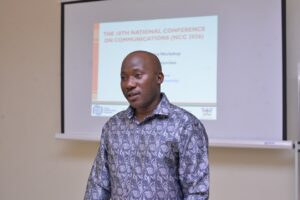
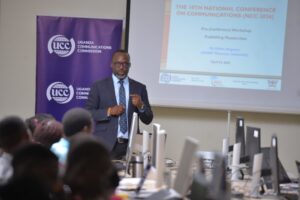
Dr. Fred Kaggwa, Dean of the Faculty of Computing and Informatics (FCI), opened the Publishing Masterclass Workshop by emphasizing the profound honor of co-hosting such a practically vital event. His message was a wake-up call to the “brilliant minds” the university produces engineers, software architects, IT specialists, and innovators across all disciplines.
 “Far too often, the knowledge generated within these walls in our laboratories, in our dissertations, in our final year projects remains trapped between four walls,” Dr. Kaggwa noted, gesturing to the room. “Look around yourself; you will see the four walls I mean. It never sees the light of a journal. It never touches a peer review. It never joins the global conversation. Today, we begin to change that.”

Sharing a personal word of encouragement, the Dean spoke of his own journey as a young lecturer. He reflected on how passion for computer security and data science was not enough; he had to learn the publication ecosystem through persistence and a deep commitment to learning.
From appearing in Springer journals to co-authoring an AI and Data Science chapter available via MIT Libraries, his work has reached audiences from Harvard to Berlin. “I tell you this not to impress you,” he told the scholars, “but to impress upon you that this is possible. It is possible from here. It is possible from Mbarara, from Kampala, from Uganda, and from Botswana.”
Defining the Craft: What is Research?
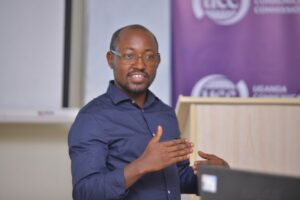
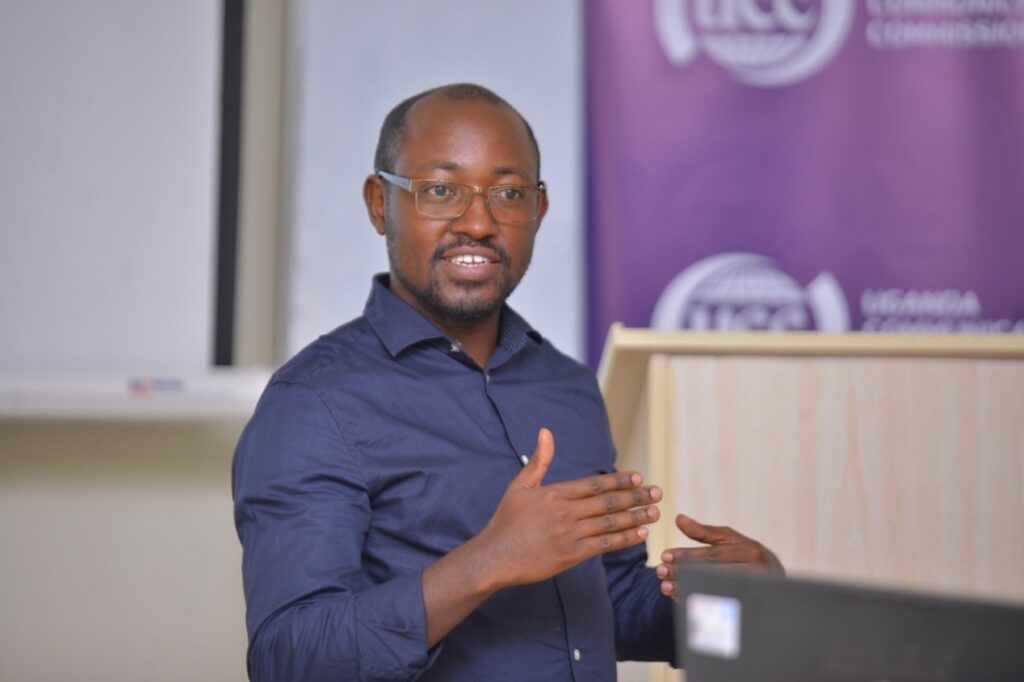
The atmosphere shifted from inspiration to deep focus as Dr. Edwin Mugume from Makerere University took the podium. He stripped away the jargon to define the core of their mission, explaining that scientific research is a systematic, controlled investigation. To be world-class, research must be:
- Problem-Driven: Starting with a specific, unsolved gap.
- Goal-Oriented: Following a clear, measurable roadmap.
- Cyclical: Understanding that every answer births a new question.
- Interpretive: Moving beyond “showing data” to explaining what that data actually means.
The Anatomy of Success
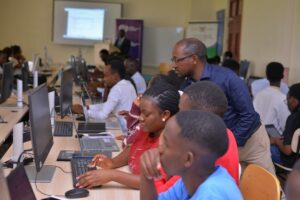
Following the conceptual deep dive, Dr. Adones Rukundo (MUST) broke down the “Anatomy of a Research Paper,” walking scholars through the essential components:
- The Identity: Crafting a title that hooks and an abstract that informs, supported by strategic keywords.
- The Context: An introduction that sets the stage and a Literature Review that proves a gap actually exists.
- The Core: Maintaining absolute transparency in Methodology followed by objective Results.
- The Final Word: A deep-dive Discussion and a Conclusion that reinforces impact, backed by a watertight list of references.

Hands-On: The Digital Edge
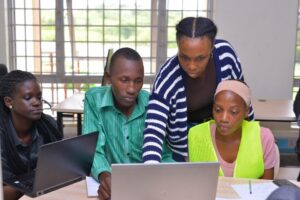
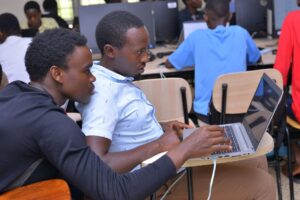
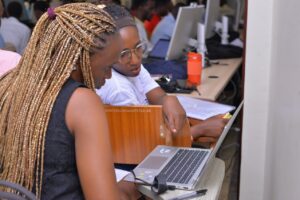
The room transform into a hive of activity. Theories were traded for laptops as students moved into practical demonstrations. Supported by Opelo Tshekiso, a CMU alumnus, the facilitators guided scholars through digital tools for citation management and collaborative platforms. This was teamwork in its purest form—blending high-level academic theory with the technical “know-how” required to navigate modern publishing ecosystems.
 A call to action: #NCC2026
The workshop wasn’t just about learning; it was about doing. Dr. Mugume issued an immediate opportunity for the participants: the 10th National Conference on Communications (#NCC2026). Hosted by Makerere University, the conference is seeking papers in transformative tracks such as AI & Data Science, FinTech, Smart Societies, and ICT for Social Impact.
Mark your Calendars:
- Submission Deadline: May 1, 2026
- Acceptance Notification: May 22, 2026
- Final Paper Submission: June 5, 2026
- Details: ncc.co.ug
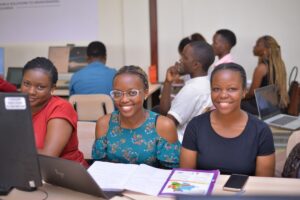
Exclusive Opportunity: For the successful candidates whose papers navigate the rigorous peer-review process, the rewards go beyond a line on a CV. The organizing team at Makerere University is offering full board sponsorship to attend and present at the conference. But the journey doesn’t stop at the podium; these scholars will also be granted exclusive industry visits, providing firsthand exposure to the professional ecosystems where their research can truly come to life.
The bottom line: A new chapter for MUST
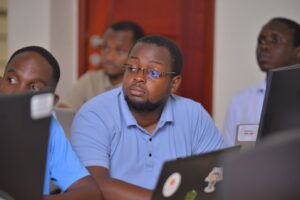
What a transformative experience! As we wrap up this masterclass, the energy at MUST is proof that the future of research is bright. Huge thanks to Makerere University and the Uganda Communications Commission (UCC) for bringing this invaluable training to our campus.
Equipping our scholars with the “anatomy of a paper” and the digital tools to publish is a game-changer for institutional visibility and scientific impact in Uganda. MUST is no longer just a place of learning; it is a launchpad. By mastering the art of publication, these researchers are ensuring that their “brilliant ideas” become “real community solutions.”
The walls have come down. The global stage awaits.