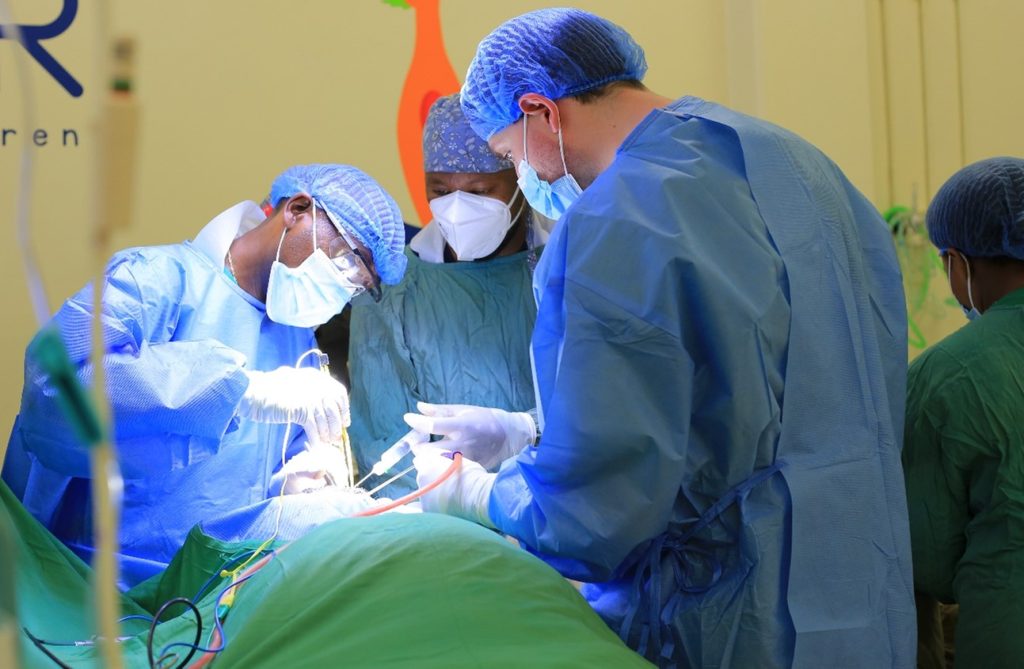
The 3rd International Neurosurgery Conference (February 26th–27th, 2026) was more than an academic gathering; it was a historic milestone for medicine in East Africa. Under the theme, “Advancement in Neurosurgical Oncology and Neurocritical Care: Pioneering Innovations for Enhanced Patient Output,” Mbarara University of Science and Technology (MUST) and Mbarara Regional Referral Hospital (MRRH) solidified their roles as regional hubs for surgical excellence.
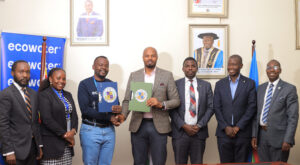
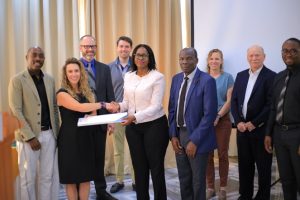
This landmark event was fueled by a powerful partnership with the University of Colorado Anschutz Medical Campus (CU Anschutz) and supported by the College of Surgeons of East, Central and Southern Africa (COSECSA).
A visionary opening
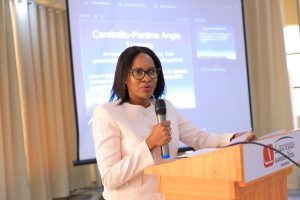
The conference was officially opened by the Vice Chancellor, Prof. Pauline Byakika-Kibwika, who reinforced MUST’s strategic path toward becoming a regional powerhouse for specialized medical training. With the newly minted Master of Neurosurgery program, MUST is no longer just teaching medicine it is engineering the future of Ugandan surgery.
“What truly sets this partnership apart is its heart,” Prof. Byakika-Kibwika stated. “We are not just discussing theory; we are witnessing miracles. I must highlight the incredible humanitarian spirit of the CU Anschutz team. Through their ‘full board’ sponsorship, they are providing life-saving neurosurgical care to our most vulnerable patients those who could never otherwise afford such complex procedures. In a field where costs can be a barrier to life itself, your generosity ensures that no patient is left behind because of their economic status.”
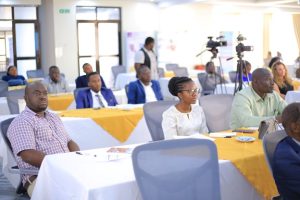
The Vice Chancellor also recognized the local “giants” upon whose shoulders the conference stands, commending the team led by Prof. David Kitya and Dr. Blessing Michael Taremwa for sustaining this partnership. This collaboration allows the university to gain hands-on mentorship and technology transfer from global leaders while providing the community with world-class medical care at no cost.
Day 1: Brain Tumor Management and Intraoperative Ultrasound
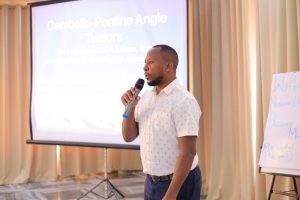
The scientific discussions tackled the most delicate regions of the human brain: the Cerebellopontine Angle (CPA) and the eloquent cortex.
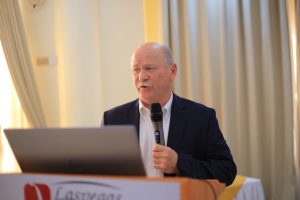
- Expert Insight: Kevin Lillehei (University of Colorado) decoded the complexities of vestibular schwannomas. He emphasized that in neuro-oncology, precision starts with diagnosis; distinguishing a tumor from a mimicking cyst is the difference between a successful recovery and a permanent neurological deficit.
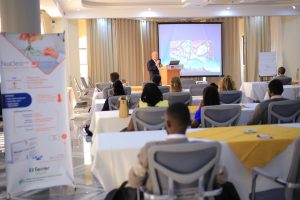 Had two presentations, Gliomas in eloquent cortex-Preoperative investigations and intraoperative neuro monitoring techniques, Use of ultrasound in intracranial and spinal surgery.
 - The Tech Edge: Ryan Ormond showcased how intraoperative mapping has revolutionized glioma surgery. By keeping patients awake and using electrophysiological monitoring, surgeons can navigate the brain’s “no-fly zones,” the areas controlling speech and motor function, with unprecedented safety.
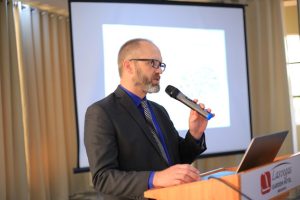
Dr. Ryan Ormond “Through awake craniotomy techniques, we are no longer operating in the dark. We are talking to the brain while we repair it.” Dr. Ryan Ormond
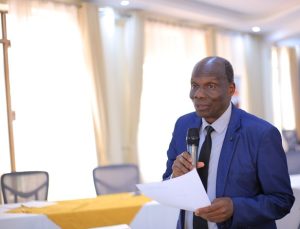
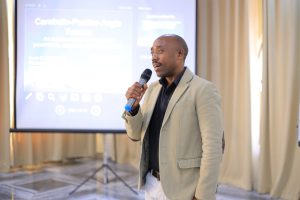
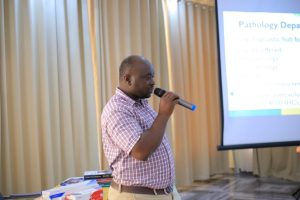
From the conference Hall to the Operating Table
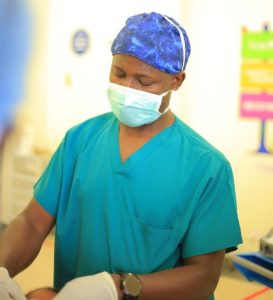
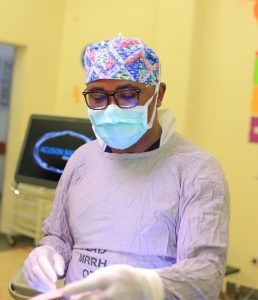
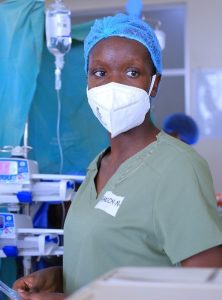
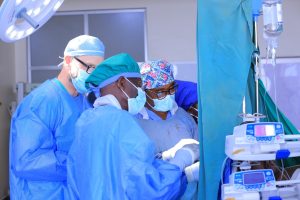
The conference’s true impact was felt at Mbarara Regional Referral Hospital, where theoretical discourse became surgical reality. The “Awake Craniotomy,” as noted by Prof. Kitya, marked a milestone in the region’s medical history. The following cases were successfully handled during the surgical camp:
 Adult Innovations:
- Sphenoid Wing Meningioma Resection: A masterclass in anatomical precision.
- Awake Craniotomy: Real-time functional monitoring that allowed the surgical team to protect the patient’s cognition and speech while removing the tumor.
Pediatric Breakthroughs:
- Ultrasound-Guided Shunts: Utilizing real-time imaging to ensure the safety and accuracy of shunt placement in neonates.
- Endoscopic Septotomy: Minimally invasive techniques representing the cutting edge of Cerebrospinal Fluid (CSF) disorder management.
Strengthening the Continuum of Care
Day 2: General Neurosurgery and Neurocritical Care
 The second day of the conference shifted focus toward the clinical complexities of General Neurosurgery and Neurocritical Care. The sessions bridged the gap between advanced surgical interventions and the rigorous monitoring required to manage neurological emergencies.
From exploring life-altering surgical options for epilepsy to the precise protocols of stroke and trauma management, the day’s presentations highlighted the multidisciplinary approach essential for improving patient outcomes in both specialized theaters and Intensive Care Units.
Key Topics and Presentations
-
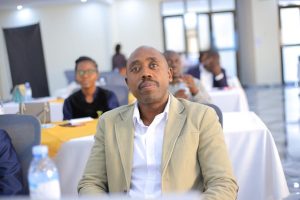 Dr. Blessing Micheal Taremwa
Role of Surgery in Epilepsy Management: An exploration of patient selection criteria and the various surgical options available to those with drug-resistant epilepsy. By Dr. Blessing Michael Taremwa
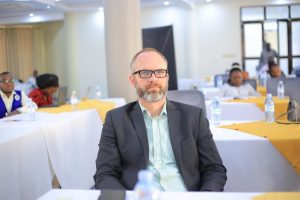
- Degenerative Spine Disorders: A comprehensive look at modern classifications, diagnostic investigations, and the spectrum of treatment options, presented by Ryan Ormond.
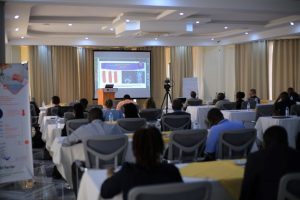
- Presentation online on: Monitoring and Management of Brain Trauma: Luis Cava detailed the critical protocols for managing intracranial pressure and systemic stability in traumatic brain injury (TBI) patients.
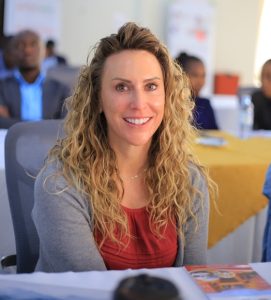
- Acute Management of Ischemic Stroke: Marisa Marsolek presented the latest evidence-based strategies for rapid intervention during the “golden hour” of ischemic stroke.
- Cerebral Aneurysms: A deep dive into clinical presentations, the necessity of advanced radiological imaging, and the evolving surgical and endovascular management options.
- Common ICU/HDU Complications: A vital session on identifying and managing the frequent respiratory, metabolic, and neurological complications that arise in neurosurgical patients within high-dependency environments.
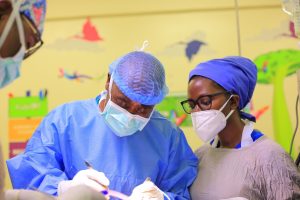
Cases handled during the camp
| AGE/SEX | DIAGNOSIS | PROCEDURE |
| 55Y OLD FEMALE | LEFT SPHENOID WING MENINGIOMA | CRANIOTOMY +TUMOR RESECTION |
| 47Y OLD MALE | LEFT PARIETAL GLIOMA | AWAKE CRANIOTOMY +TUMOR RESECTION |
| 15Y MALE | PILOCYTIC ASTROCYTOMA | CRANIOTOMY +TUMOR RESECTION |
| 47Y OLD FEMALE | RIGHT PARIETAL COMPLEX MENINGIOMA | CRANIOTOMY +TUMOR RESECTION |
| 1 MONTH OLD FEMALE | MAXIMAL HYDROCEPHALUS | VENTRICULOPERITONEAL SHUNTING ULLTRASOUND GUIDED |
| 5 MONTHS OLD FEMALE | SEPTATED VENTRICLES WITH MAXIMAL HYDROCEPHALUS | ENDOSCOPIC SEPTOTOMY + VENTRICULOPERITONEAL SHUNTING |
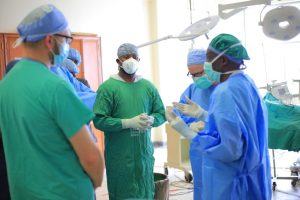
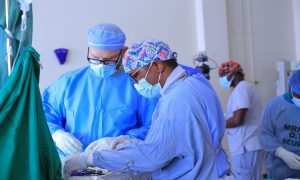
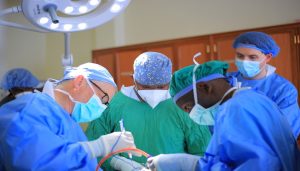
The 3rd International Neurosurgery Conference proved that MUST is more than an institution; it is a hub for regional transformation. By blending international expertise from Colorado with the grit and talent of Ugandan trainees, MUST is ensuring that the most complex neurological conditions can be treated right here at home.
Through this synergy of Specialized Training and Modern Technology, the university is not just following global standards it is setting them for East Africa. In the spirit of the university motto, this milestone ensures that as we innovate and serve, “Succeed we MUST.”