By 2050, the ground beneath our feet may shift for millions. Global estimates suggest that up to 216 million people could be forced to relocate within their own borders due to the unrelenting pressures of climate change. In the heart of the Great Lakes Region, this isn’t a distant “what if” it is a current reality.
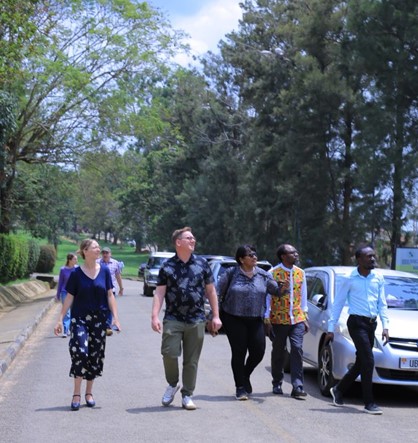
From February 17th to 18th, 2026, Mbarara University of Science and Technology became the epicenter of a global movement to meet this challenge head-on. Under the banner of the CLARS (Climate Adaptation and Resilience Strategies for Migrants and Host Communities) project, researchers, policymakers, and local leaders gathered to transform years of data into a blueprint for survival and dignity.
 The Global Partnership
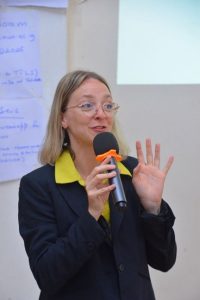
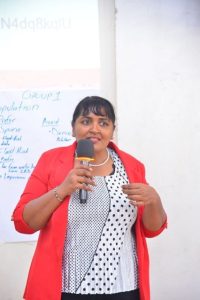
CLARS is a global research initiative (2024–2027) led by Prof. Gail Krantzberg and Project Manager Dr. Savitri Jetoo of McMaster University, Canada. The project brings together a distinguished team of international experts:
- Frank Ahimbisibwe: MUST (Uganda) – Host and Local Investigator.
- Present Members: Alan Dixon (University of Worcester, UK), Prof. Derek Van Berkel (University of Michigan, USA), Dr. Lisa Maillard (University of Michigan, USA), Dr. Peter Oino Gutwa (Kisii University, Kenya), and Dr. Lekule Thaddeus Aloyce (Tumaini University Makumira, Tanzania).
- Contributing Members (Absent): Laurie Parsons (Royal Holloway, University of London, UK), Prof. Maria Lemos (University of Michigan, USA), Dr. Julia Blocher (Potsdam Institute for Climate Research, Germany), and Dr. Hezron Mogaka (University of Embu, Kenya).
The partnership focuses on building resilience for climate migrants and host communities in the Lake Victoria Basin and the Great Lakes Region. CLARS shifts the focus to what happens next: helping cities proactively plan for migration through evidence-based, inclusive urban planning. For more information, visit: www.clarsproject.com

Day 1: The Architects of Tomorrow
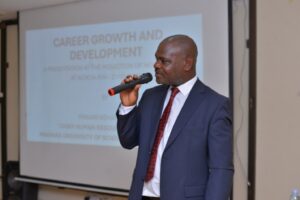
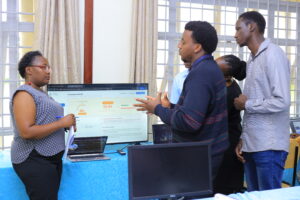
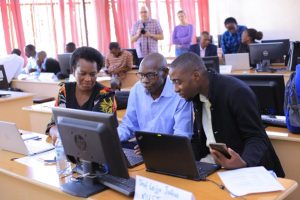
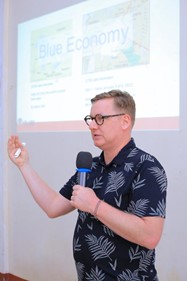
The workshop began with a deep dive into the mechanics of urban survival. Led by CLARS Uganda Coordinator Dr. Frank Ahimbisibwe, researchers and postgraduate students explored the PIVOT tool a sophisticated modeling system used to identify where city development should be encouraged or discouraged as populations shift.
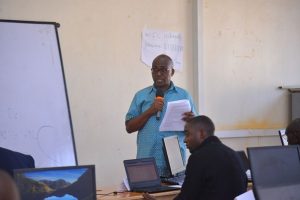
The atmosphere was one of intense focus as students from various faculties engaged in role-playing exercises, navigating the friction between urban expansion and environmental preservation. The sessions went beyond maps; they were about learning to communicate technical uncertainty to local authorities while keeping human stories at the center of the data.
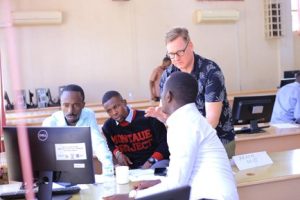
Day 2: The Power of the Collective
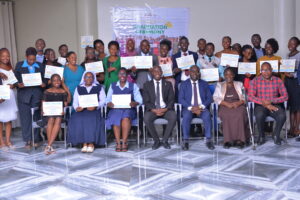
On the second day, the “ivory tower” met the town square. The room was filled with a diverse tapestry of stakeholders: city and district leaders from Mbarara and Isingiro, NGOs, farmers, MUST academic staff, , media teams and representatives from the Office of the Prime Minister and Ministry of Water and Environment
Prof. Pauline Byakika-Kibwika, Vice Chancellor of MUST, set a powerful tone in her opening remarks. She emphasized that while research is the foundation, its true value lies in its application.
“It is vital to conduct research about our climate, but it is even more critical to use that knowledge to impact the community directly,” she noted, acknowledging the tireless work of participants in bridging the gap between theory and practice.
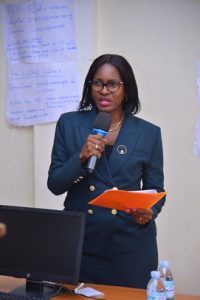
Dr. Wendo Mlahagwa, Dean of the Faculty of Interdisciplinary Studies, added a global perspective. She highlighted that CLARS fosters a “South-to-North” and “South-to-South” exchange, where the lived experiences of those in the Lake Victoria Basin inform urban planning in cities as far-flung as Detroit and Mwanza.
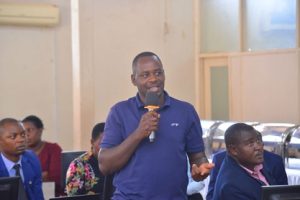
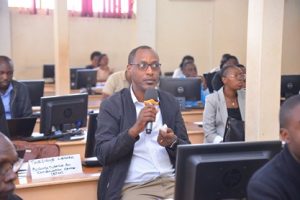
Engaging stakeholders
Translating Data into Dignity
The core of the workshop focused on “layered vulnerabilities.” In Uganda, climate pressures are felt most acutely in the Mt. Rwenzori and Mt. Elgon regions, driving displacement toward receiving cities like Mbarara, Mbale, Kasese, and Kampala.
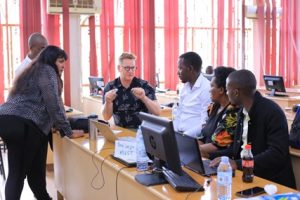
Participants were divided into inclusive breakout groups to ensure a farmer’s voice carried as much weight as a city planner’s. Together, they validated and refined strategic policy recommendations, focusing on:
- Climate-aware Siting: Deciding where to build homes so they aren’t lost to future floods.
- Resource Management: Ensuring water and sanitation systems can handle sudden population surges.
- Socio-economic Integration: Reducing friction between migrants and host communities through shared economic goals.
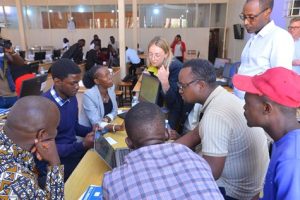
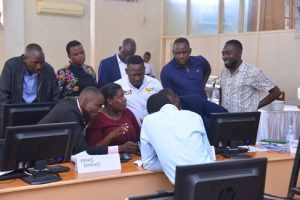
Group discussions
A mandate for the Future
As the workshop drew to a close, the alignment with MUST’s mandate was clear: to provide accessible, high-quality education and research that drives community development. In a world where the climate is reshaping where we live and work, the university has stepped up as a guardian of the future.
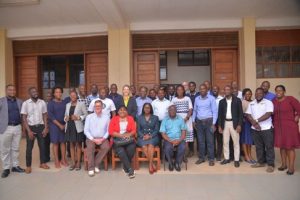
The mission of CLARS reminds us that while we may not be able to stop every storm, we can choose how we build our shelters. As one participant reflected:
“Climate migration is not just a story of loss; it is an opportunity to build the inclusive, resilient cities our children deserve.”