As the global community races toward 2030, the deadline for Sustainable Development Goal (SDG) 6.2 ending open defecation and ensuring universal access to sanitation remains a pressing challenge. At Mbarara University of Science and Technology, this mission is more than a target; it is a life’s work.
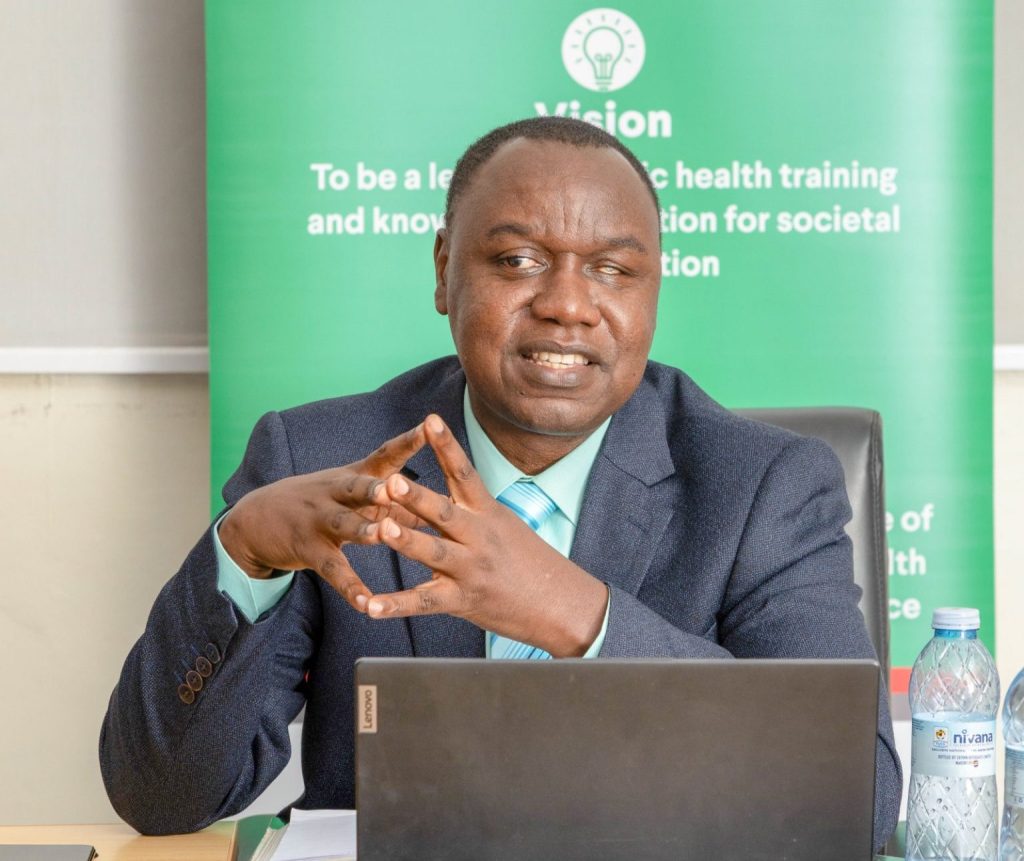
Dr. Dr.Moses Ntaro (PhD), from the Department of Community Health at MUST, recently defended his PhD at Makerere University, presenting compelling evidence on how behavioral change and student-led interventions can accelerate sanitation progress in rural Uganda.
The reality of the morning run
In the terraced hills of Kabale, the early morning ritual has long been a hurried race to the bushes (ahakashaka or omukishaka) before the sun rises. This “choreography of necessity” is driven by a lack of private sanitation, exposing families particularly women and children to health risks and a loss of dignity.
While serving as the Assistant Coordinator of Community-Based Education (COBERS) at MUST, Dr. Ntaro witnessed this reality firsthand. “Students always took me on transect walks to show me how high open defecation practice was,” he explains. the evidence was undeniable, reflected in health facility records filled with cases of diarrhea, intestinal worms, and malnutrition.
The research findings
Dr. Ntaro’s research, published in BMC Public Health, examined 492 residents in Kabale District. At the start of the study, the statistics were sobering: only 3 percent of households were truly Open Defecation Free (ODF).
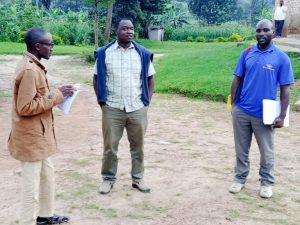
Using the RANAS framework, Dr. Ntaro discovered that sanitation is not merely about “bricks and mortar” (building latrines), but about power, habit, and social expectation. His study found that:
-
Sustainability is behavioral: Households that prioritized consistent handwashing and maintained clean latrine facilities were significantly more likely to sustain ODF status.
-
Context matters: Factors associated with ODF status were deeply linked to household leadership, clean compounds, and consistent hygiene practices.
Students as change agents
The breakthrough in Dr. Ntaro’s doctoral thesis, “Effect of Student Community Engagement on Open Defecation-Free Status,” lies in the workforce. He tested whether health profession students could facilitate Community-Led Total Sanitation more effectively than traditional methods.
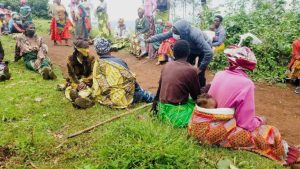
The results were definitive. Under the MUST COBERS model where medical trainees are embedded in rural communities students achieved higher success rates in triggering and sustaining ODF status.
- Effectiveness: More households became open defecation-free compared to traditional approaches.
- Efficiency: Students proved to be a more cost-effective human resource.
- Presence: Unlike one-off visits, students stayed for weeks, building trust and providing the repetitive follow-up necessary for long-term behavioral change.
A call to action for 2030
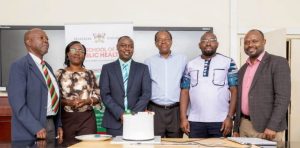
With only four years remaining to meet the 2030 deadline, Dr. Ntaro’s work leaves a pragmatic roadmap for policy-makers. He argues that student engagement should be institutionalized and embedded into district sanitation planning and budgeting.
“There is a need for continued follow-ups and continued student engagement if long-term impact is to be realized,” Dr. Ntaro recommends.
As MUST celebrates this academic and humanitarian milestone, the message is clear: the tools and evidence to end open defecation already exist. The work of Dr. Dr.Moses Ntaro (PhD) proves that by reimagining who leads the change moving from theory to community-based evidence dignity can finally be restored to every household, one door at a time.
A message from the Vice Chancellor
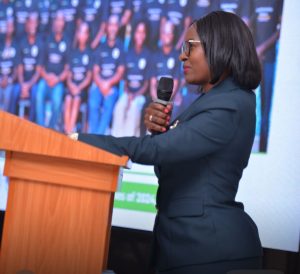
“On behalf of Mbarara University of Science and Technology, I extend my warm congratulations to Dr. Moses Ntaro upon the successful defense of his PhD. His research is a testament to the power of academic inquiry when it is rooted in the needs of our communities.
And by demonstrating how our students can be at the forefront of ending open defecation, Dr. Ntaro has shown that MUST is not only an institution of learning but a hub for real-world transformation. His work perfectly aligns with our vision of building people who build systems moving beyond theoretical evidence to create a tangible, lasting impact on public health.
We thank Dr. Ntaro for his dedication to restoring dignity to our households and for continuing to wave the MUST flag high through excellence in community-based research and service.”
Prof. Pauline Byakika-Kibwika, Vice Chancellor, MUST
This story was first featured by Makerere University ahead of their 76th Graduation Ceremony coverage. Images used in this publication are courtesy of the Makerere University communication team.