Disclaimer: This story, “The Silent Epidemic: Restoring Dignity in Mbarara,” is a narrative account based on information and personal experiences provided by individuals who have consented to share their stories. While it aims to highlight the challenges of urogynecological conditions and the impact of initiatives like those at Mbarara University of Science and Technology, it is not intended as medical advice or a substitute for professional medical consultation.
The experiences described are individual and may not be representative of all cases. Medical conditions and their treatments are complex and require personalized assessment by qualified healthcare professionals. Readers seeking medical information or treatment for urogynecological issues should consult with a doctor or specialist.
The purpose of sharing these stories is to raise awareness, encourage others facing similar challenges to seek help, and acknowledge the efforts of the medical professionals and funders involved.
The wind whispered tales of desperation across the Ugandan plains, carrying the unspoken burdens of countless women. For many, childbirth, a joyous occasion, had become a gateway to a life of shame, isolation, and constant suffering. This silent epidemic, often stemming from home deliveries and under-resourced health facilities, was the cruel reality of urogynecological challenges, particularly for those in poverty-stricken homes.
 Urogynecology is a specialized field of medicine focusing on disorders of the female pelvic floor. This includes conditions like urinary incontinence (involuntary leakage of urine), fecal incontinence (involuntary leakage of stool), and pelvic organ prolapse1 (when organs like the uterus, bladder, or rectum drop from their normal position). These issues, while not life-threatening, are profoundly debilitating, impacting a woman’s physical health, emotional well-being, and social life.
 The challenges in Uganda, especially for impoverished women, are multifaceted:
• Limited Access to Healthcare: Remote villages and poor road networks make reaching even basic health centers a monumental task.
• Inadequate Facilities: Many health centers, particularly in rural areas, are severely understaffed, lack essential equipment, and may not have trained personnel for complicated deliveries.
• Financial Barriers: The cost of medical consultations, scans, and surgeries is often prohibitive, forcing women to suffer in silence.
• Lack of Awareness: Many women are unaware that their conditions are treatable, often attributing their symptoms to natural consequences of childbirth or aging.
• Cultural Stigma: The shame associated with incontinence or prolapse can lead to social isolation and a reluctance to seek help.
These challenges are exacerbated by the prevalence of home deliveries, often attended by unskilled traditional birth attendants, and overstretched public health facilities. The consequences are devastating: women unable to control their bodily functions, leading to ostracization from their communities, inability to work, and a profound loss of dignity.
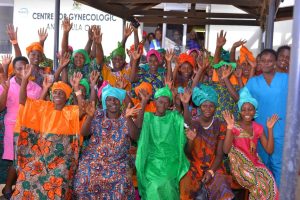
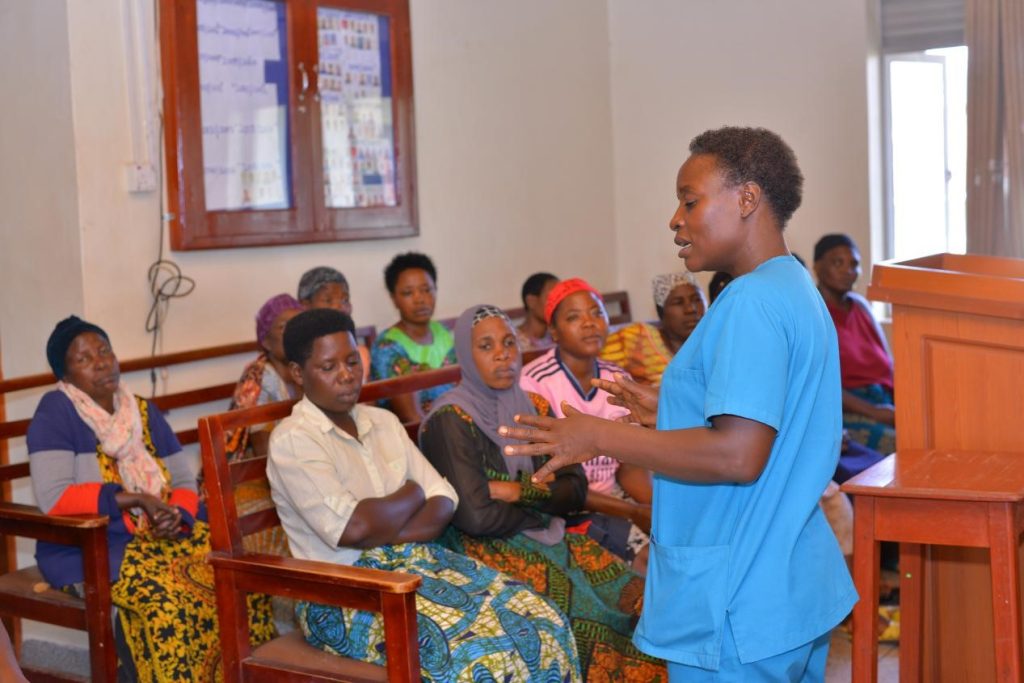
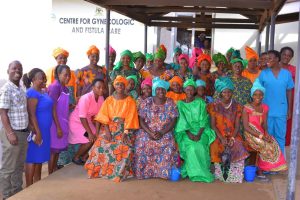
 However, amidst this despair, a beacon of hope shines from Mbarara University of Science and Technology (MUST). Thanks to the unwavering support of various funders, year-round camps are organized, offering life-changing urogynecological repairs completely free of charge. These camps are not just about medical procedures; they are about restoring hope, dignity, and a sense of belonging to women who have long been forgotten.
Here are some of their powerful stories, shared with immense courage and a desire to encourage others and express profound gratitude:
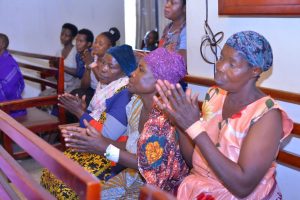 Marion, 30 years old: “I have three children. While giving birth to my second born, I got a tear during delivery at Ntale Health Centre IV. I was told my baby was very big. The nurse who delivered me said she had an emergency, which took her some time. On finishing handling the emergency, the nurse went for lunch. On her return, I was still in the delivery room. She said I help myself, that she had many cases to handle. My stool started coming out uncontrollably. I could not cough or sneeze.
Five years later, I conceived again. I was told I had twins because my belly was so big. I never went for any antenatal care till my last day; I was shy about my challenge. When I went into labor, I went to the hospital. I was requested for a scan before admission. I didn’t have the money. I hung around the hospital and took advantage of the change of duty. I rushed into the labor ward screaming in pain. I was taken to the delivery room. I pushed my baby with ease; this was in Ibanda Hospital. It was one baby. I thanked God I didn’t go for the scan, because it would have been a waste of money, which I don’t have anyway. The woman next door lost her baby. I was told to help myself clean up and go to the postnatal ward. My problem increased. I just went home the next day because it was a ‘normal’ delivery. My pain increased, the tear was bigger. I could not sit properly.
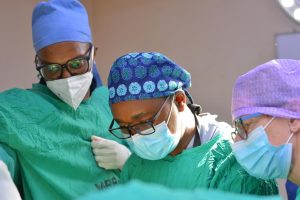 One day I heard an announcement about cancer screening at Mbarara Regional Referral Hospital. I was told I didn’t have cancer but had a big challenge that could be addressed. I was directed to the ward where women with such challenges are. I was told to look for 950,000 Ugandan Shillings for the surgery. I just went home, lost hope. I was rejected by my entire family.
Then, I was listening to the radio and they called for women with my condition and said everything was paid for. I thought I was dreaming. I waited for the advert for clarification; this was in vain. I just traveled to Mbarara Hospital. I was four days early. I requested the nurse to allow me to stay because I had just borrowed the transport fees. She accepted. Other women came in one by one, and since they found me, I was already used to the place. They even voted for me to be a chairperson.
It is three days after the surgery, and I have not had any challenge. They have given me food, transport, and a dress. I didn’t know kind people still exist. I am going back home to give thanks and tell my village mates about this. If it was not my friend who lent me some money, I would stay here for some time to help doctors, either to clean up, just to show my gratitude. They don’t know what they did for me. May God bless the doctors in Mbarara.”
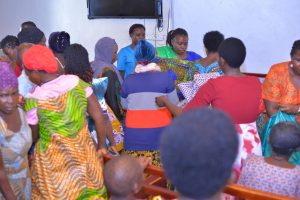 Esther, 53, from Kamwenge: “I gave birth to my firstborn at home; my uterus came out but went back. When I conceived the second child, I went to deliver in Fort Portal Hospital. I told them about the issues. I delivered my third born and everything was fine. After three years, the problem came back. I had no money, so I settled with my problem. When I had my fourth, fifth, sixth, seventh, and eighth born, the problem kind of ceased. My last born is about 10 years. Two years ago, the uterus came out again. Two months ago, it came out completely.
I heard an announcement over the radio about my situation. They shared a contact. I called for details. I came in time. I was screened, and I went to theatre on Monday. Today I am fine. I give the glory to God that has worked through the doctors to heal me.”
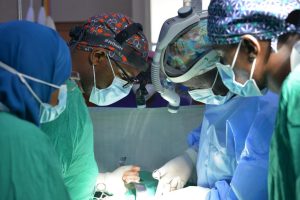 Aisha, 24, from Kawempe, Kampala: “When I had my first baby, who is two years and six months old, I received stitches, but they came out, and all of a sudden, the urine started leaking. I went to Mulago National Referral Hospital three times. I did not receive any attention. I gave up.
A friend told me about a surgery in Kirudu, Mulago. I went and consulted. I was told I needed 2 million Ugandan Shillings. Being a housewife and my husband having all the expenses on him, I gave up. I conceived my second baby; she is now one month old. The doctor at Mulago who delivered me told me about the camp that was starting on May 24th in mbarara I had never been to western uganda I kept asking my neighbour when we are getting to mbarara. I traveled all the way, came by bus with my little one. I was received by Musawo Josephine. It has been three days, and I have had a dry bed. I am happy. I didn’t know I would repair and heal fully.
Fellow women, don’t die in silence. Solutions are there. Just keep in the know, especially on social media, and consult.”
These stories are a testament to the transformative power of compassionate healthcare and the unwavering dedication of the medical professionals at Mbarara University of Science and Technology. They underscore the critical need for continued support for such initiatives, ensuring that every woman, regardless of her socio-economic status, has the opportunity to reclaim her dignity and live a life free from preventable suffering. The kindness of strangers and the expertise of these doctors are indeed restoring faith in humanity, one repaired life at a time.