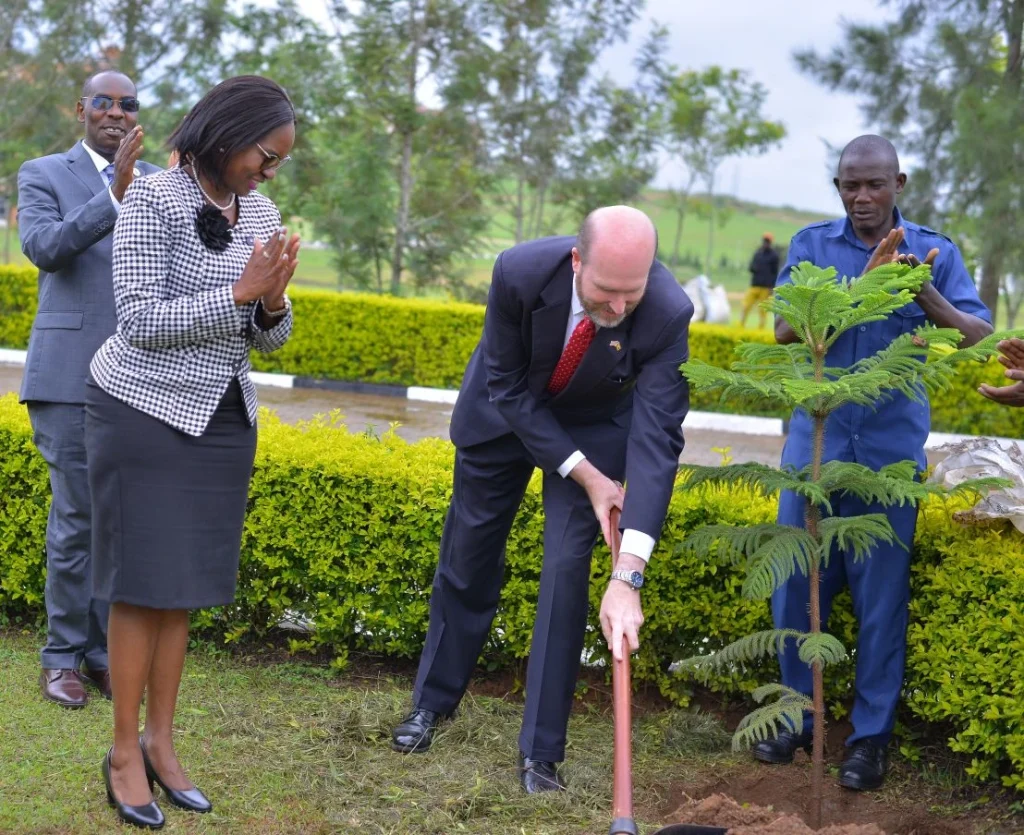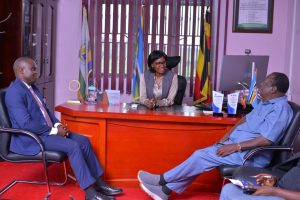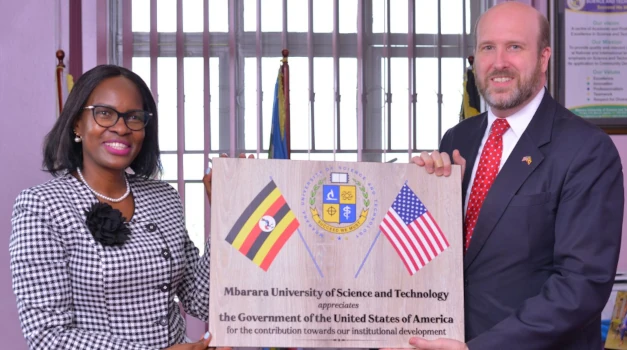
On 5th March 2026, the campus pulse shifted. The visit of the United States of America Ambassador to Uganda, H.E. William W. Popp, brought a new energy to the corridors of the Mbarara University of Science and Technology (MUST).
A focus on research and innovation
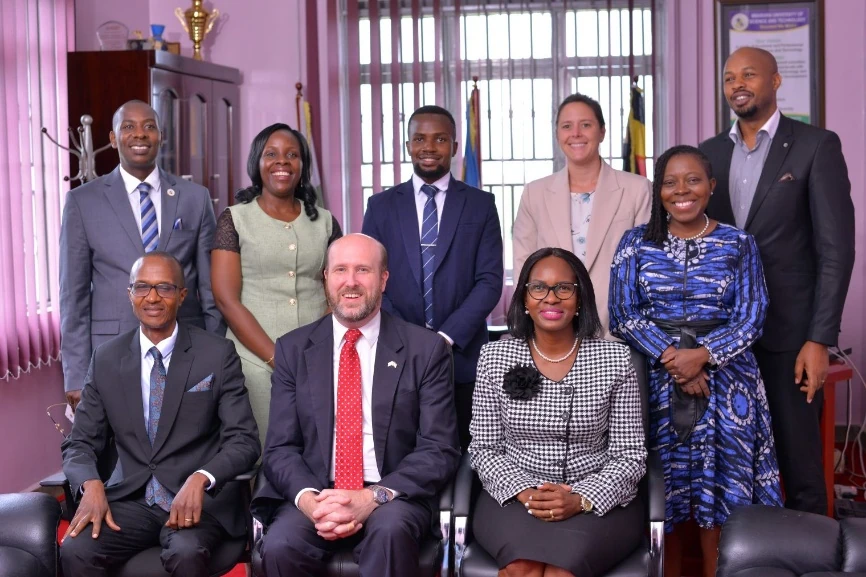
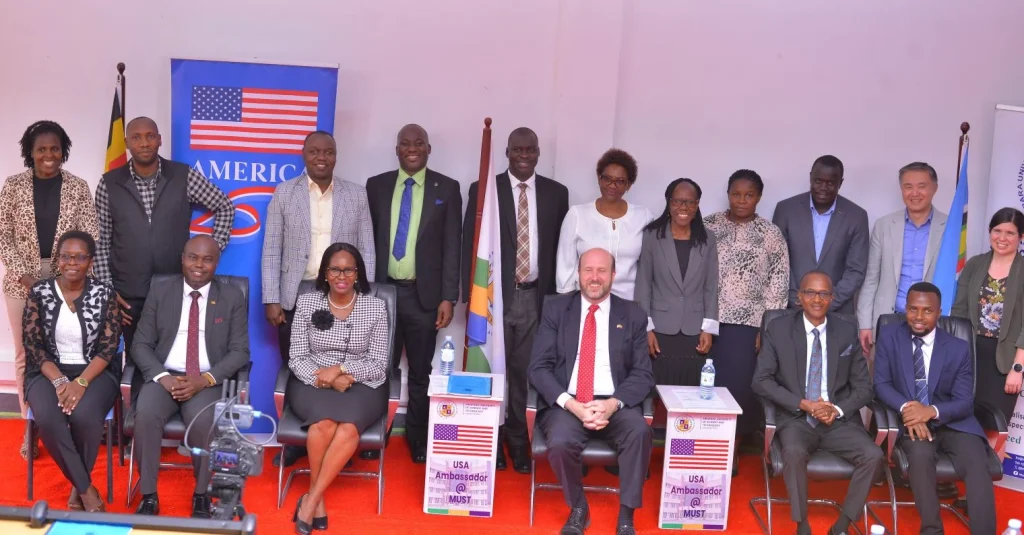
Ambassador Popp’s visit was not merely ceremonial. It was a strategic engagement of the research and innovation partnership that has shaped MUST’s trajectory for years. During the courtesy call, the Vice Chancellor Prof. Pauline Byakika-Kibwika appreciated the Ambassador over the long standing relationship between MUST and the US institutions and engaged him about the current funding of research and innovation initiatives at MUST. Other MUST leaders who attended the meeting were; Assoc. Prof. Robert Bitariho, the Deputy Vice Chancellor in charge of Finance and Administration, Prof. Joseph Ngonzi, the Deputy Vice Chancellor in charge of Academic Affairs, Mr. Vincent Kwatampora Kansiime, the University Secretary, Dr. Medard Twinamatsiko Katonera, the Director of the Centre for Innovations and Technology Transfer (CITT), Mr. Lucky Ariho Rwabuturumba the Guild President, Ms. Sheila Niinye Twinamatsiko, the Senior Communications Officer in charge of International Relations and Ms. Angella Nakato, the Senior Communications Officer in charge of Public Relations.
The Ambassador’s delegation included Dr. Mary Boyd the Country Director of the Centre for Disease Control, Ms. Tasha Howe the Consular Officer, Mr. Ezra Nuwenyine the US Embassy education outreach coordinator and Ms. Jennifer Nedinger.
MUST has benefited from the partnership with the USA and the numbers tell a compelling story. The Vice Chancellor noted that there are 93 active research projects at MUST coordinated by the Grants Office, 65 of which are US funded majorly by the National Institutes of Health (NIH), representing an investment exceeding $36 million.
Innovation beyond the laboratory
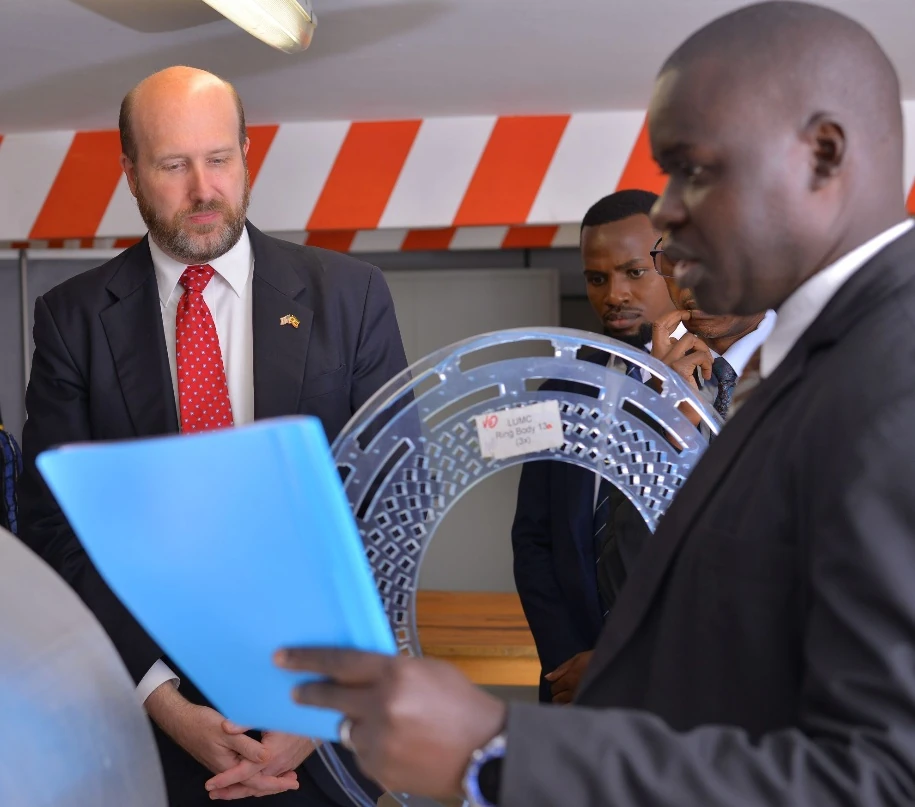
At CITT, the rhetoric of global health and digital revolution took physical form. The Ambassador moved through the innovation hubs, engaging with Principal Investigators and project leads who are turning laboratory prototypes into real-world solutions.
Here, science is not buried in journals; it is being scaled. From ideas to product development, the CITT stands as proof that MUST is no longer just a training ground for clinicians, it is a launchpad for micro-industrialization.
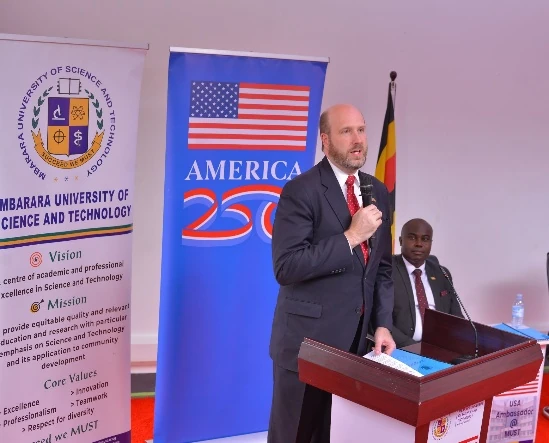
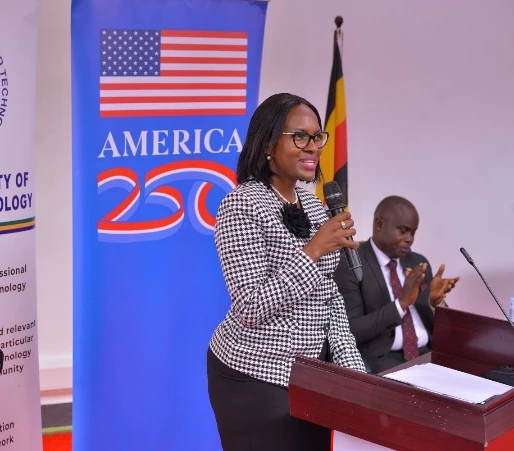
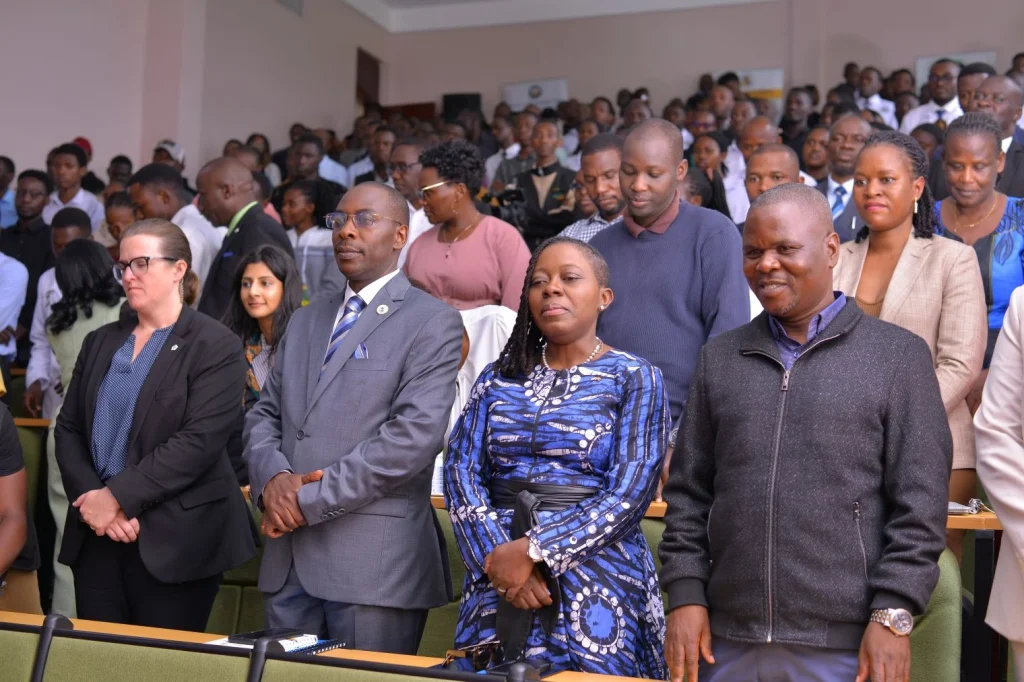
While leadership discussed budgets and policy, the student body brought the reality of the university’s mission to the forefront. The plenary session was a testament to the discipline and rigor fostered at MUST. Addressing the assembly, Ambassador Popp challenged the students to “dream big.” He framed a degree from MUST not as a static qualification, but as a “passport to global impact.” The students were motivated to embrace challenges and look for solutions that impact humankind.
When fourth-year medical student Amanyire Ambrose led the national anthems, the room held a rare, unified focus. These are the students who walk the rural transects, who lead the community health initiatives, and who are expected to navigate a world racing toward AI and rapid change.
The countdown to impact
As 2026 unfolds, the US-Uganda health agreement signed in late 2025 has set a high bar for cooperation. As Prof. Byakika-Kibwika noted, institutional success is not found in a single visit or a headline. It is found in the continued commitment to evidence-based development and the steady, quiet work of research.
As the Ambassador departed, the questions remained, humming in the background of the day’s successes: How can the gains of yesterday be cemented for tomorrow? How does a university ensure that its research is not just temporary, but transformative and innovative? At MUST, the answer is etched into the motto: Succeed we must and the already copyrighted CITT Innovation pathways framework that envisions a knowledge-based economy with higher societal impact. With the roadmap laid out during this high-level visit, the work continues, one project, one innovation, and one student at a time.
As the Ambassador departed, the day’s achievements and gains were clear. For MUST, the visit underscored an important journey the university has taken over years in innovations as witnessed with impact-driven exhibitions. The Ambassador and Embassy team were impressed by the strong innovation ecosystem that continues to put MUST on the global map. The Ambassador’s US pledge to continue supporting MUST provides a new hope of future gains and strengthens the university’s internationalisation agenda.