
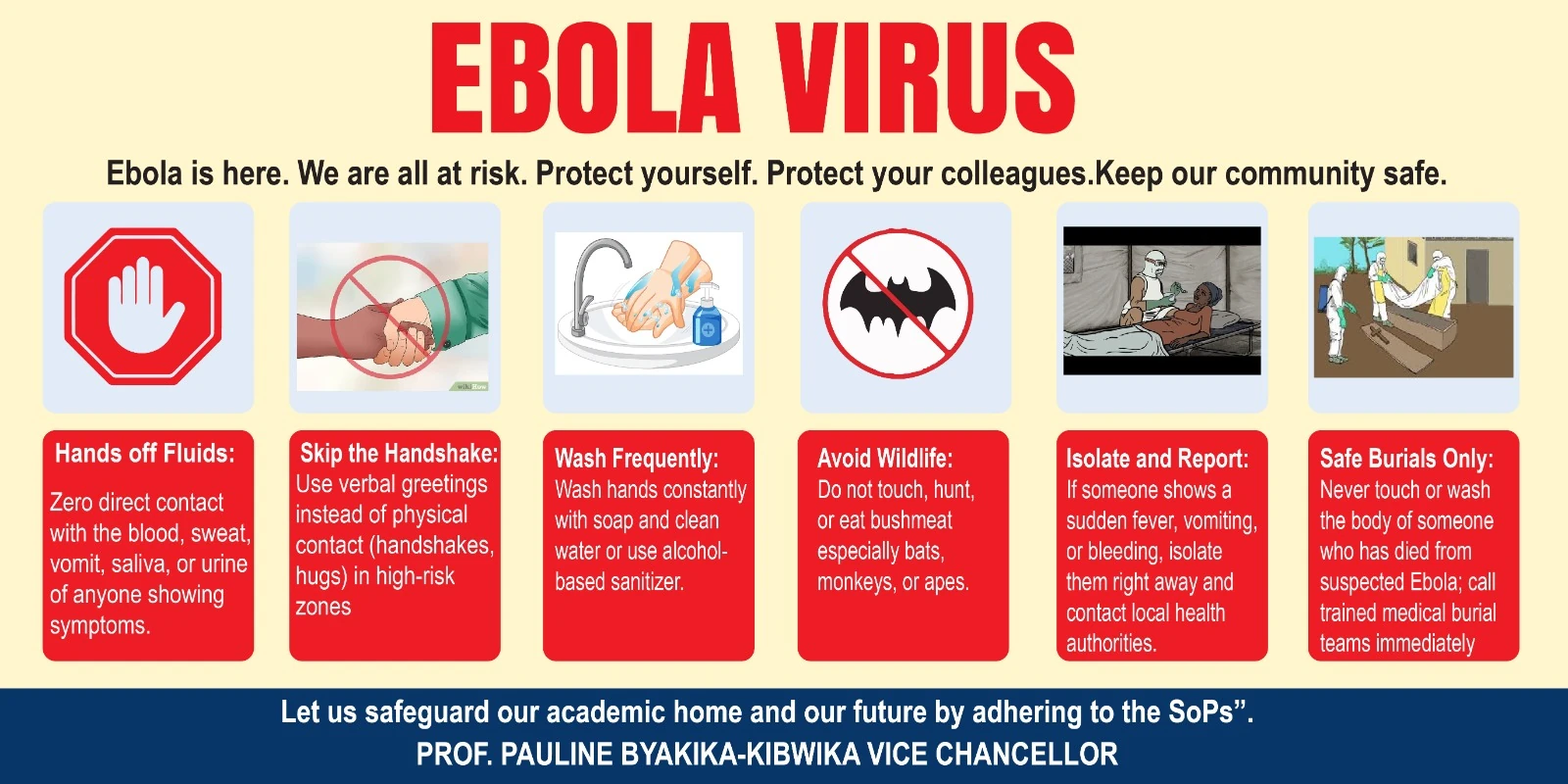
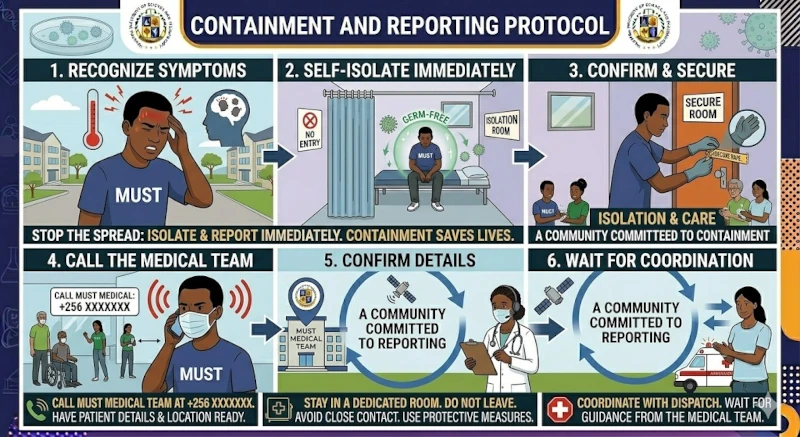
Ebola virus disease is a serious viral disease that kills within a short time but can be prevented. It is spread through direct physical contact with body fluids like saliva, blood, urine, feaces, vomit and sweat of a person infected with Ebola. Direct physical contact with bodies of persons who have died from Ebola also spreads the deadly disease. The signs and symptoms of a person with Ebola include fever, headache, vomiting blood, joint and muscle pain, diarrhea and bleeding through body openings (eyes, nose, gums, ears, anus and private parts).
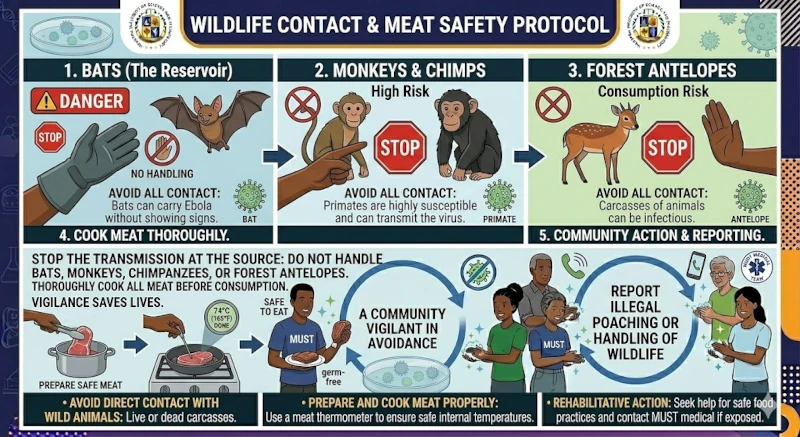
You can protect yourself from Ebola by avoiding direct physical contact with body fluids such as blood, saliva, feaces, vomit, urine and sweat of a person infected with Ebola. Washing your hands thoroughly with soap and clean water regularly and in case of any direct physical contact with an infected person reduces spread. You are called upon to be vigilant, to protect yourself and your colleagues and to look out for any person who develops symptoms of Ebola. All these cases should be reported to the nearest health facility for screening and appropriate management.
Ebola Control Measures
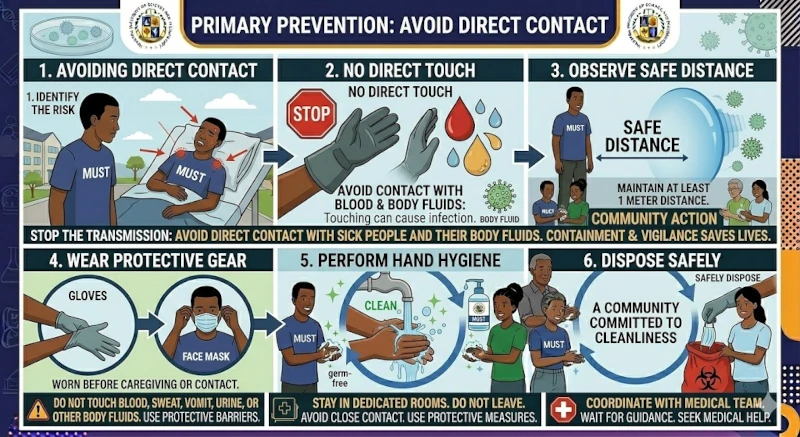
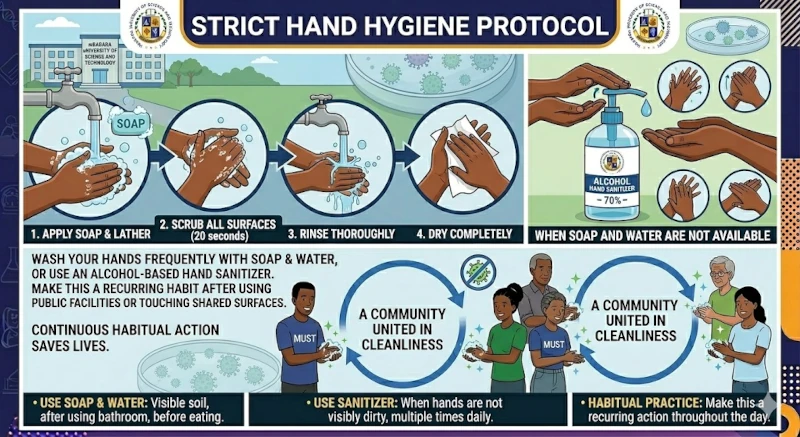
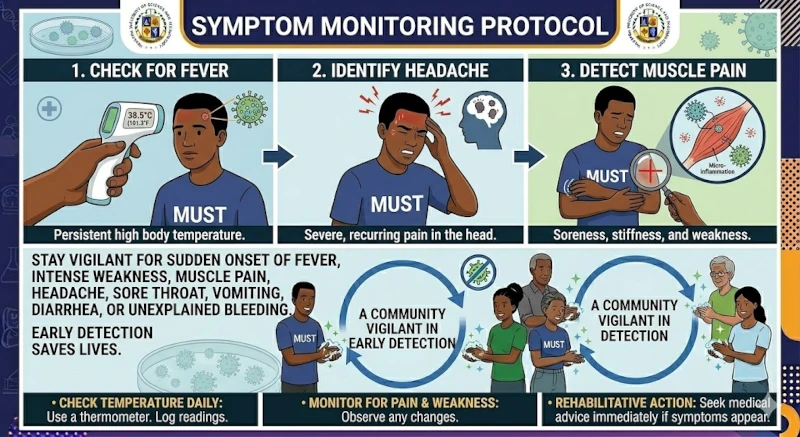
View MUST Sentsitization Plan on Ebola Outbreak Preparedness.